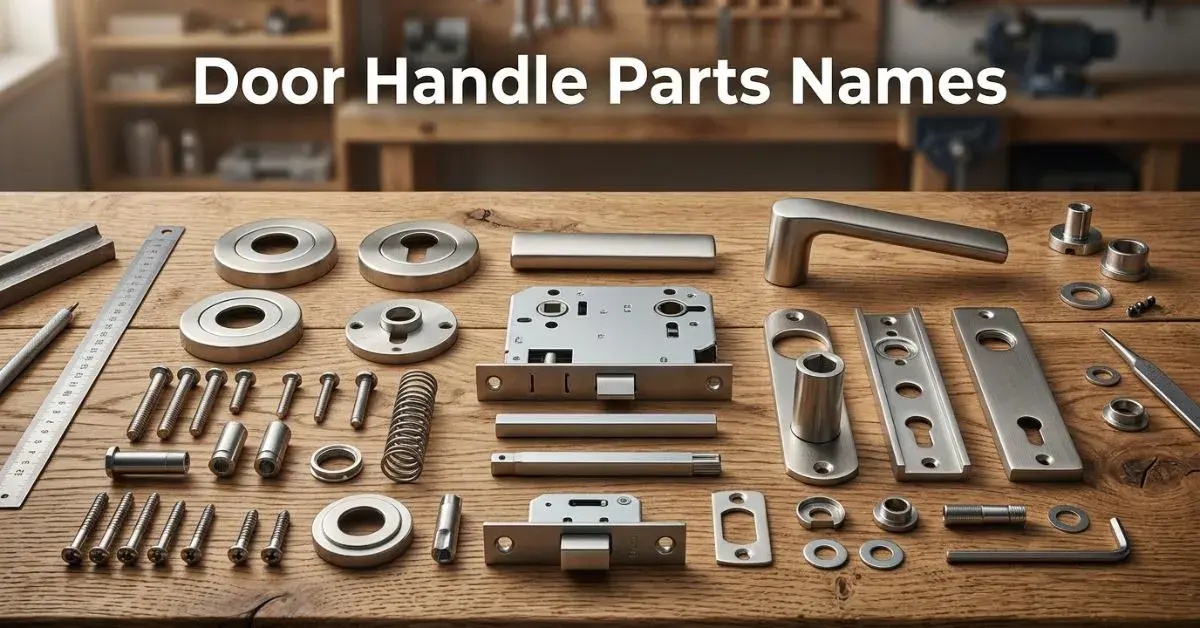
That is why learning door handle parts names can save you time, money, and a lot of guesswork.
A handle is more than the part you grab. A complete door handle setup can include a lever or knob, rose, backplate, spindle, latch, screws, springs, and other small hardware. Each piece has a job.
Some parts help you open the door. Others keep the handle stable, return it to position, or connect it to the latch inside the door.
This guide makes those names easy to understand. You will learn what common door handle parts are called, what each part does, and where you will usually find it.
If you are fixing a loose handle, shopping for replacement hardware, working on a home project, or simply curious, you are in the right place. Keep reading, and those mysterious little pieces will start making perfect sense.
⚡ Quick Answer
Door handle parts names commonly include the handle or lever, rose, backplate, spindle, latch, strike plate, mounting screws, spring mechanism, and fixing posts. The exact parts vary by handle style, but these components work together to let you turn, pull, secure, and operate a door smoothly.
🔎 What Do “Door Handle Parts Names” Really Mean?
The phrase door handle parts names simply means the names given to the individual pieces that make up a door handle and its related operating hardware.
A handle may have a visible part you touch, but several hidden pieces help it work. For example, the spindle transfers the turning motion of the handle to the latch. The rose or backplate covers the area where the handle connects to the door. The latch then moves the door’s spring-loaded tongue so the door can open.
These terms are useful because they make repairs and shopping much easier. Instead of saying, “the little metal thing behind my handle broke,” you can identify the exact component.
In my experience studying naming systems for everyday objects, the best names are the ones that describe a part’s job or position clearly. Door hardware is a perfect example.
🚪 Common Door Handle Parts Everyone Should Know
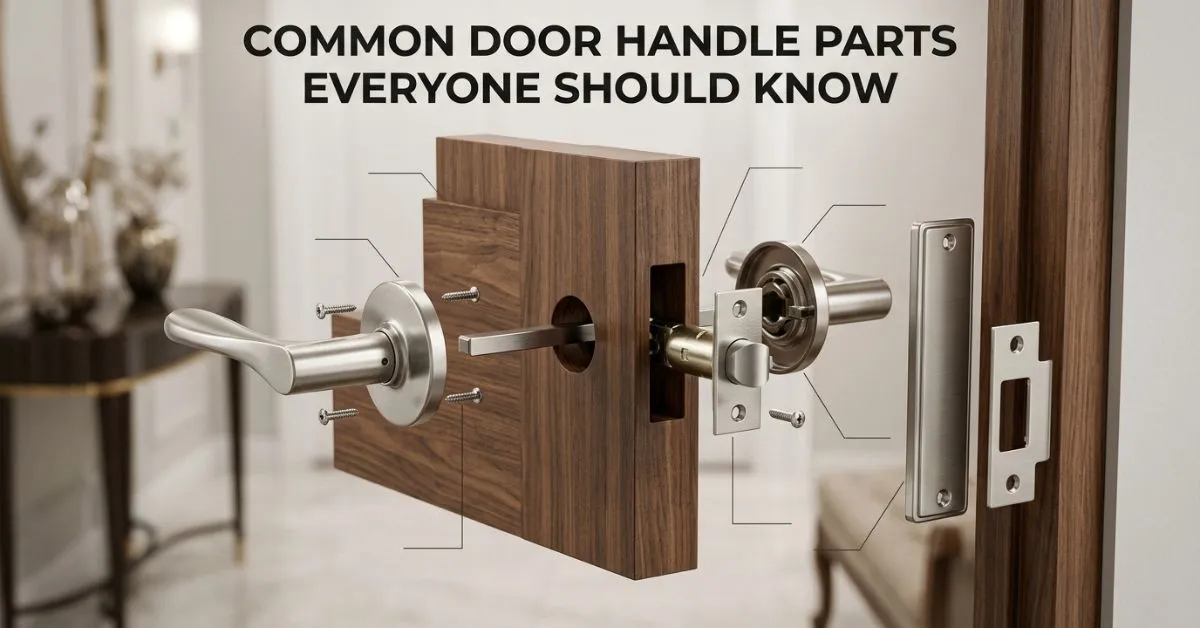
Before looking at special handle styles, it helps to learn the basic parts found on many common doors. These are the names you are most likely to hear at a hardware store or during a repair.
The exact design changes from one handle to another. Still, these core components appear again and again.
- Door Lever
Meaning: A door lever is the horizontal handle you push down or pull up to operate the door. - Door Knob
Meaning: A door knob is the rounded handle you turn by hand to operate a door. - Rose
Meaning: A rose is the decorative plate around the base of a lever or knob that covers the fixing area. - Backplate
Meaning: A backplate is a larger mounting plate behind some handles that provides support and covers the door surface. - Spindle
Meaning: A spindle is a metal bar that connects the handle mechanism to the latch inside the door. - Latch
Meaning: A latch is the spring-loaded mechanism that holds a closed door in place until the handle is operated. - Strike Plate
Meaning: A strike plate is the metal plate on the door frame where the latch enters when the door closes. - Mounting Screw
Meaning: A mounting screw fastens the handle or its supporting hardware securely to the door. - Fixing Post
Meaning: A fixing post is a small metal support used to help attach one side of a handle assembly to the other. - Spring Cassette
Meaning: A spring cassette contains a spring mechanism that helps return a lever handle to its normal position.
🏆 Best Choice: Spindle is the standout term to remember if you are learning door hardware for repairs, because it is the key link between the handle and latch.
🛠️ Door Handle Parts Used For Installation
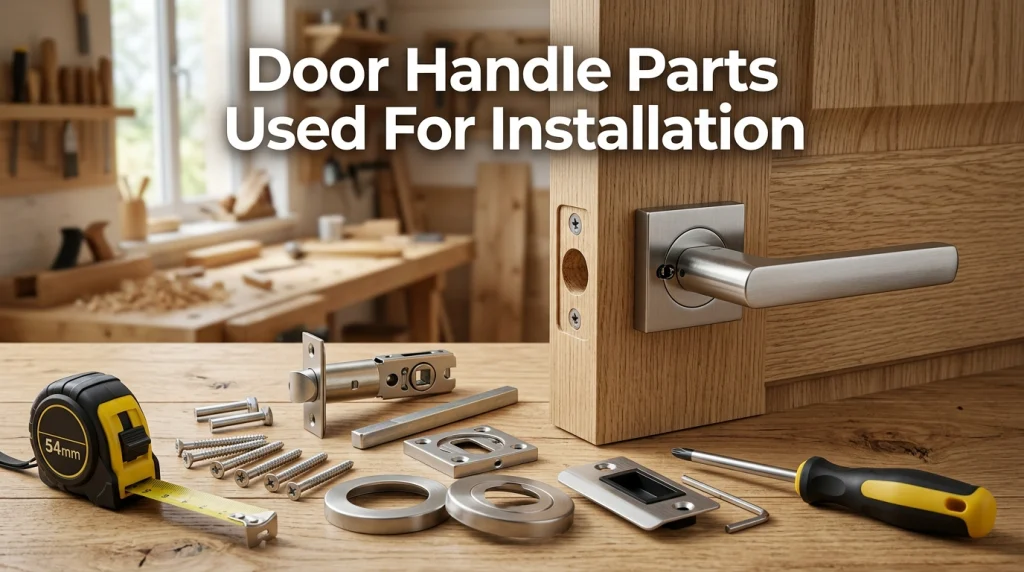
Installing a handle involves more than simply putting a lever on a door. Several small pieces keep the hardware aligned, tight, and secure. Knowing these parts can be especially helpful when a replacement handle comes with unfamiliar hardware.
- Through Bolt
Meaning: A through bolt passes through the door to connect and strengthen the two sides of a handle set. - Fixing Screw
Meaning: A fixing screw holds a handle component firmly against the door. - Wood Screw
Meaning: A wood screw is designed to fasten hardware directly into wooden door material. - Machine Screw
Meaning: A machine screw uses a matching threaded component to create a secure mechanical connection. - Screw Cover
Meaning: A screw cover hides an exposed fixing screw and gives the handle a cleaner finished appearance. - Mounting Plate
Meaning: A mounting plate provides a stable surface for attaching the handle assembly to the door. - Retaining Ring
Meaning: A retaining ring helps hold a handle or internal component in its correct position. - Circlip
Meaning: A circlip is a small metal retaining ring that prevents a component from sliding off its shaft or spindle. - Washer
Meaning: A washer spreads pressure around a screw or fixing point and can help protect the surrounding surface. - Threaded Sleeve
Meaning: A threaded sleeve provides internal threads that allow a screw or bolt to secure the handle assembly.
🏆 Best Choice: Through Bolt is especially useful for sturdy installations because it can connect both sides of a handle through the door rather than relying only on surface screws.
🎨 Decorative Door Handle Parts
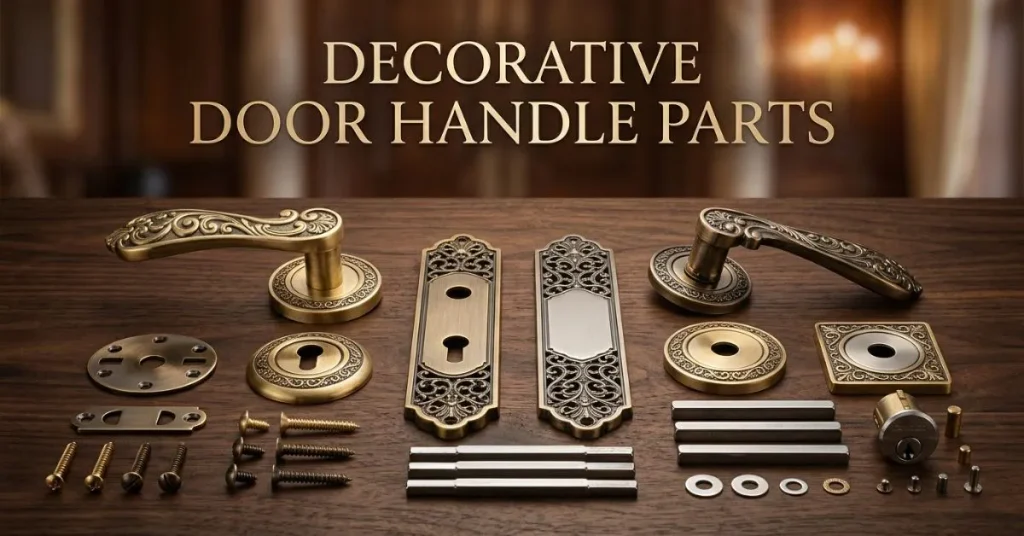
Not every part exists only to make a handle work. Some components also improve its appearance and hide rough openings or mounting hardware. This is where door hardware becomes a mix of engineering and design. A beautiful handle often has several small finishing pieces that you barely notice.
- Escutcheon
Meaning: An escutcheon is a decorative or protective plate surrounding a keyhole, lock opening, or related door hardware. - Keyhole Cover
Meaning: A keyhole cover is a small plate or fitting that surrounds or protects the opening used for a key. - Rose Cover
Meaning: A rose cover is the visible finishing section that conceals the mounting area around a handle. - Trim Plate
Meaning: A trim plate is a decorative plate used to finish the area around a door handle or lock. - Faceplate
Meaning: A faceplate is the visible metal plate fitted to the edge of a door around a latch or lock mechanism. - Spindle Collar
Meaning: A spindle collar is a small ring-like component that surrounds or supports the spindle near the handle. - Decorative Cap
Meaning: A decorative cap covers a fixing point or opening to create a smoother finished look. - Handle Collar
Meaning: A handle collar is the small surrounding section where the handle meets its rose or backplate. - Backplate Cover
Meaning: A backplate cover is a finishing piece designed to hide mounting hardware on a larger handle plate. - Door Pull Plate
Meaning: A door pull plate is a decorative and protective plate used with pull handles to provide a finished gripping area.
🏆 Best Choice: Escutcheon is the most useful term here when shopping for decorative lock and keyhole hardware because it describes both a functional and visual fitting.
🔐 Door Handle Parts Connected To Locks
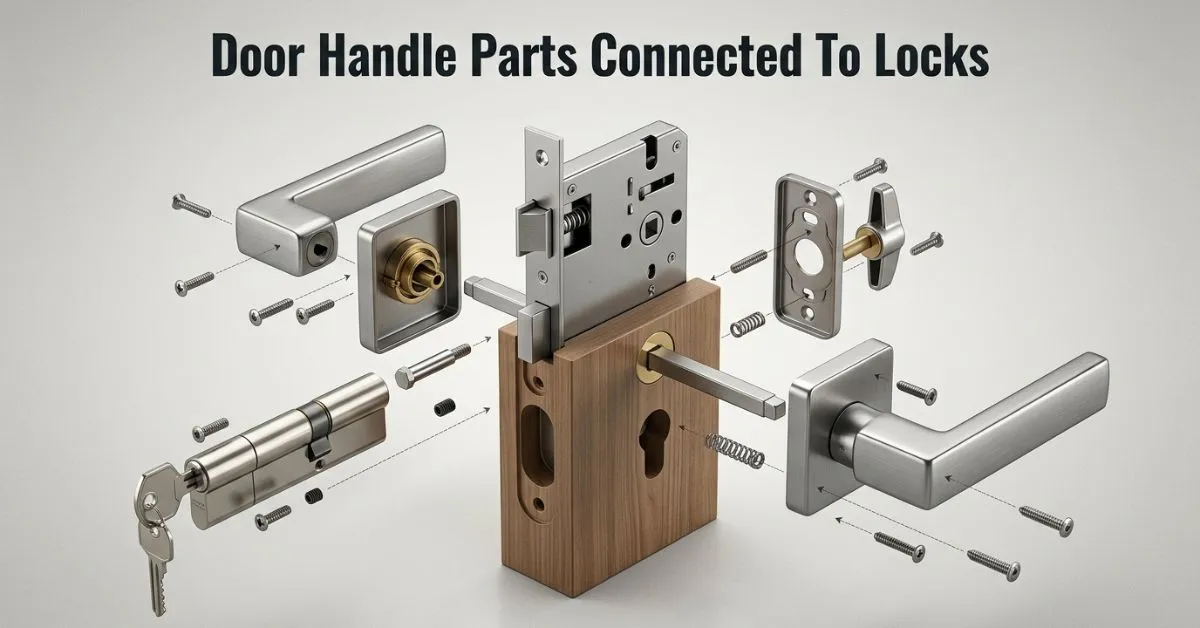
Some handles work with a simple latch, while others are part of a locking system. In those designs, additional components control access and keep the door secured. The names can sound technical at first. Once you understand each job, however, the system becomes much easier to picture.
- Lock Case
Meaning: A lock case is the enclosed housing that contains the internal working parts of a mortise-style lock. - Deadbolt
Meaning: A deadbolt is a solid locking bolt that moves into the door frame and normally cannot be pushed back by the usual latch action. - Locking Spindle
Meaning: A locking spindle is a spindle designed to transfer movement within a handle or locking mechanism. - Turnpiece
Meaning: A turnpiece is a small knob or thumb-operated fitting used to engage or release certain interior locks. - Thumbturn
Meaning: A thumbturn is a small rotating control that lets a person lock or unlock a door from one side. - Cylinder
Meaning: A cylinder is the part of many locks that contains the key-operated mechanism. - Key Cylinder
Meaning: A key cylinder is a lock component designed to receive and respond to a key. - Latch Bolt
Meaning: A latch bolt is the movable spring-loaded bolt that extends into the frame when the door closes. - Lock Bolt
Meaning: A lock bolt is the stronger locking component that extends into the frame when a locking mechanism is engaged. - Strike Box
Meaning: A strike box is a small protective housing behind or around a strike plate that helps contain the latch or bolt.
🏆 Best Choice: Thumbturn is the easiest lock-related part to recognize because it is the small control many people physically rotate when locking an interior door.
⚙️ Internal Door Handle Parts You Cannot Easily See
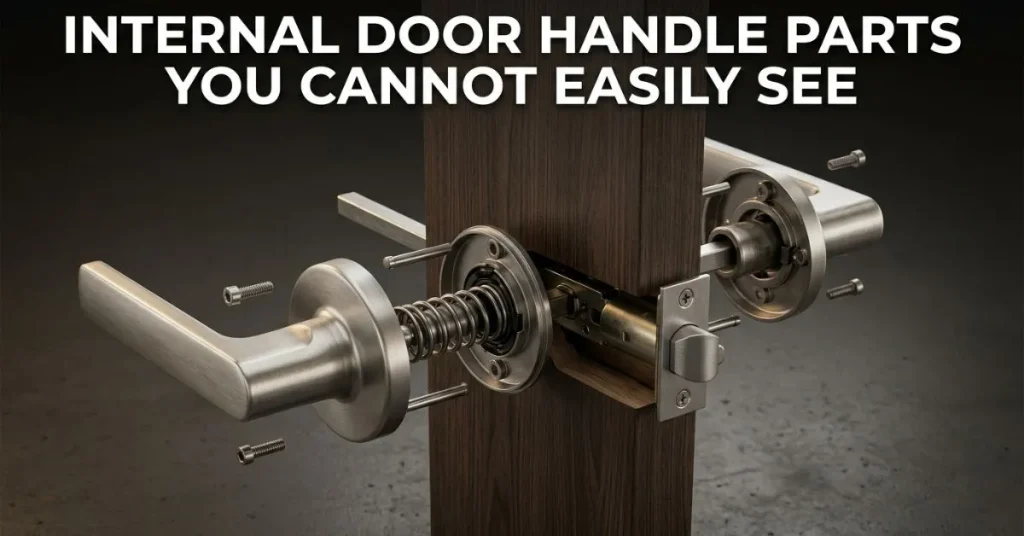
The visible handle gets most of the attention, but the hidden mechanism does much of the real work. Springs, followers, spindles, and other components transfer movement inside the door. These parts are important when diagnosing a handle that feels loose, sticks, or fails to return properly.
- Follower
Meaning: A follower is the rotating component inside a latch or lock that receives movement from the spindle. - Follower Hub
Meaning: A follower hub is the central section that connects the spindle movement to the internal latch mechanism. - Return Spring
Meaning: A return spring pushes the lever back toward its normal position after you release it. - Spring
Meaning: A spring provides stored mechanical force that helps a handle or latch move back into position. - Spring Clip
Meaning: A spring clip is a small flexible retaining component that holds hardware securely in place. - Spindle Hub
Meaning: A spindle hub is the central fitting through which the spindle transfers rotational movement. - Handle Base
Meaning: A handle base is the section where the lever or knob joins the supporting hardware attached to the door. - Lever Hub
Meaning: A lever hub is the central mounting section that connects a lever to the internal operating mechanism. - Latch Case
Meaning: A latch case is the housing that contains the moving parts of a door latch. - Cam
Meaning: A cam is a shaped rotating component that changes turning movement into another mechanical action inside some lock systems.
🏆 Best Choice: Follower is the key term for understanding how a handle actually operates a latch, making it especially valuable for DIY repairs.
🚪 Door Knob Parts & Their Names
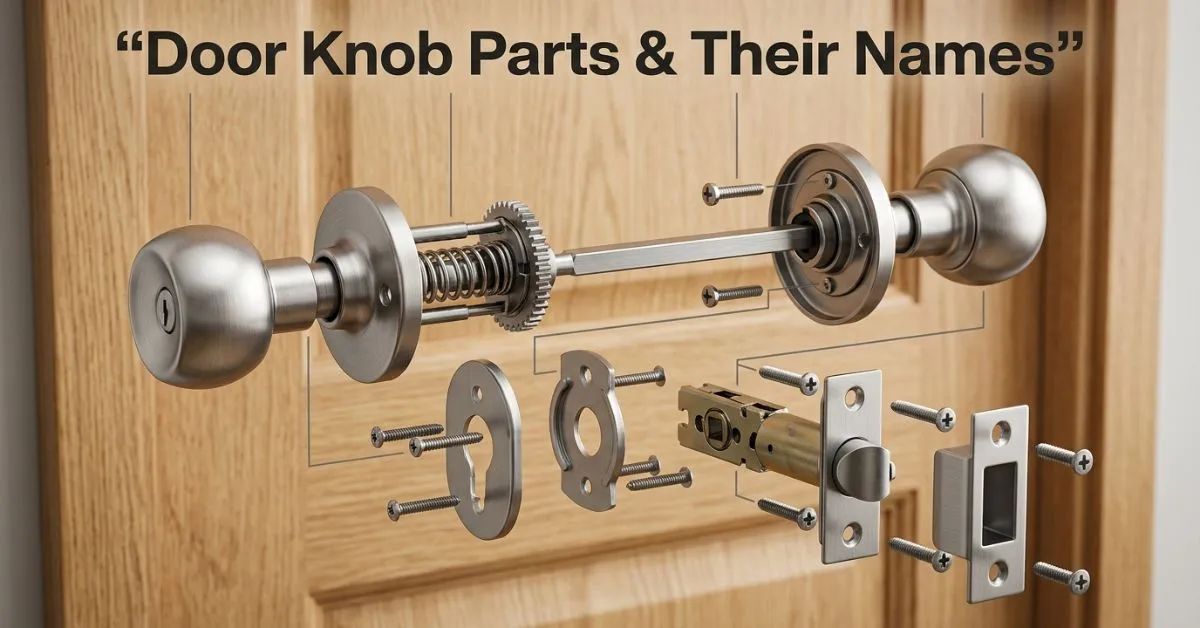
Door knobs use many of the same ideas as lever handles, but their shape and internal operation can differ. The round knob must transfer your turning motion into the latch without slipping. If you are replacing an old knob, these terms can help you describe exactly what you need.
- Knob Grip
Meaning: The knob grip is the rounded section your hand holds and turns to operate the door. - Knob Shank
Meaning: The knob shank is the narrow section connecting the gripping portion to the mounting mechanism. - Knob Spindle
Meaning: A knob spindle transfers the rotational movement of the knob into the latch or lock mechanism. - Knob Rose
Meaning: A knob rose is the circular trim surrounding the base of a door knob. - Knob Escutcheon
Meaning: A knob escutcheon is a decorative fitting that surrounds a keyhole or locking area associated with the knob. - Knob Retainer
Meaning: A knob retainer keeps the knob securely attached to its internal mounting assembly. - Knob Release Button
Meaning: A knob release button allows the knob to be removed from its mounting mechanism on certain designs. - Knob Mount
Meaning: A knob mount is the hardware that secures the knob assembly to the door. - Knob Collar
Meaning: A knob collar is the small ring between the knob and its surrounding trim. - Knob Face
Meaning: The knob face is the main visible surface of the rounded gripping section.
🏆 Best Choice: Knob Shank is the most helpful term when a replacement knob looks right but you need to understand how its grip connects to the mounting hardware.
↔️ Lever Handle Parts Explained
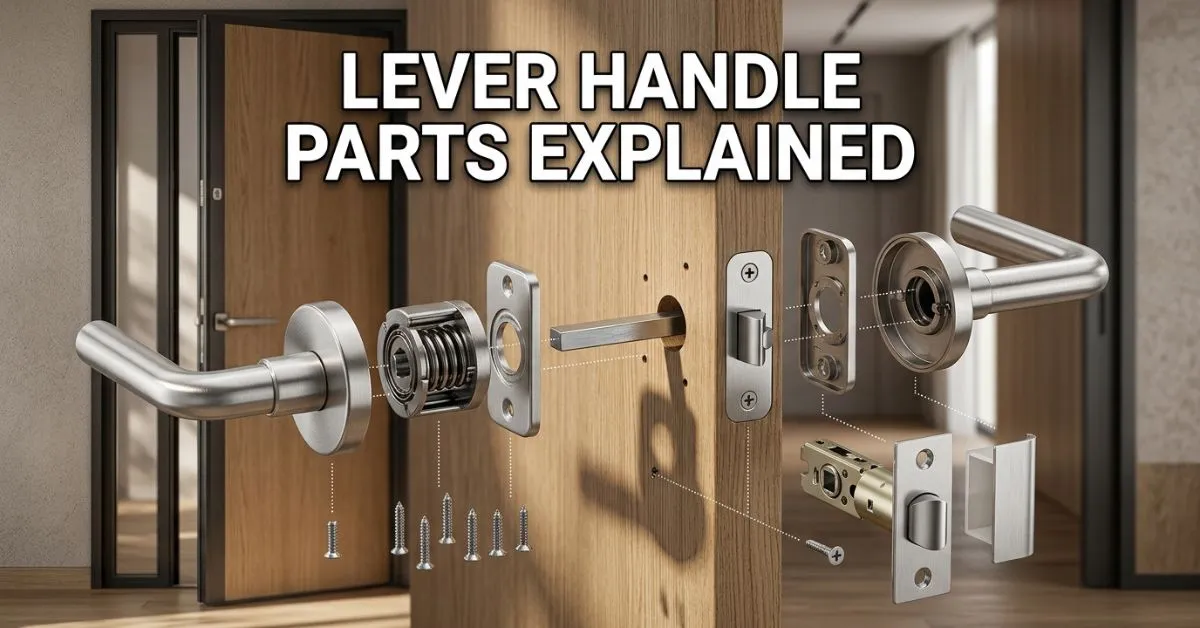
Lever handles are common on modern interior doors because they are easy to operate. You simply press the lever instead of gripping and twisting a round knob. Their clean appearance can make the hardware look like one piece, but several components work together underneath.
- Lever Grip
Meaning: The lever grip is the section of the handle designed for your hand to push or pull. - Lever Tip
Meaning: The lever tip is the outer end of the handle, often rounded or shaped for comfort. - Lever Neck
Meaning: The lever neck is the narrower transition between the gripping arm and its mounting base. - Lever Arm
Meaning: The lever arm is the main horizontal section that moves when you operate the handle. - Lever Base
Meaning: The lever base is the section where the handle joins the mounting hardware. - Lever Return Mechanism
Meaning: A lever return mechanism helps bring the handle back to its resting position after use. - Spindle Slot
Meaning: A spindle slot is the opening designed to receive the matching spindle inside the handle mechanism. - Handle Stop
Meaning: A handle stop limits unwanted movement and helps prevent the lever from traveling too far. - Support Bearing
Meaning: A support bearing helps the handle move smoothly while reducing friction around its mounting point. - Lever Fastener
Meaning: A lever fastener is a securing component that keeps the lever attached to its operating assembly.
🏆 Best Choice: Lever Arm is the clearest term for explaining the part people actually press, making it useful for basic repairs and hardware descriptions.
🏠 Interior Door Handle Parts
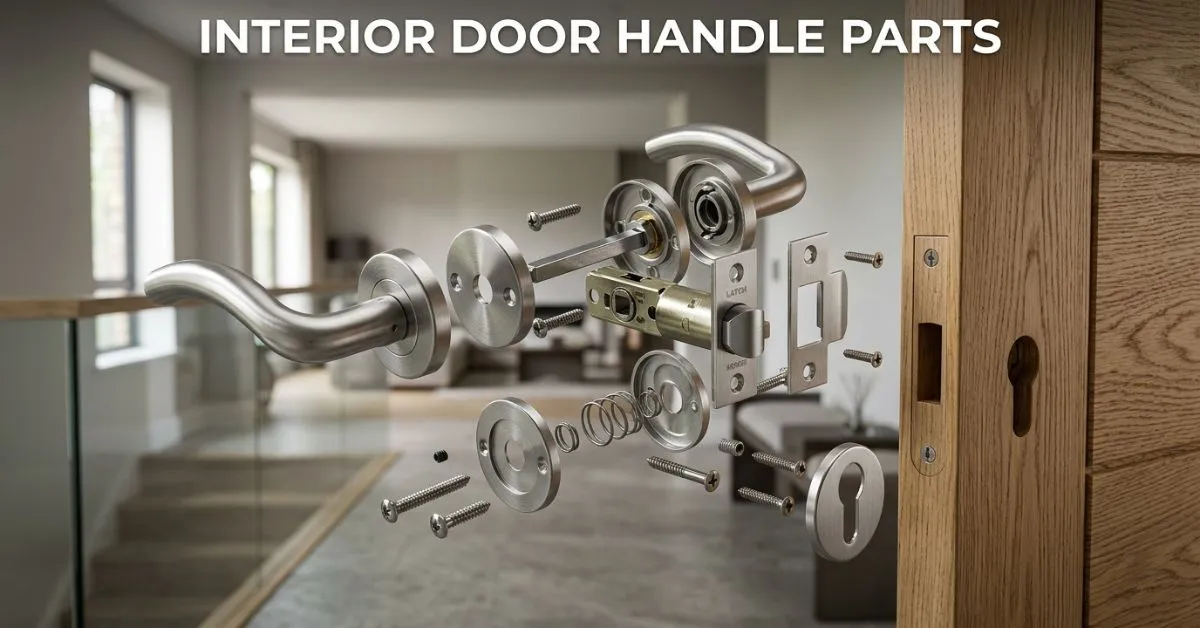
Interior doors often use lighter hardware than exterior entry doors. Bedroom, bathroom, closet, and hallway doors can each use different handle and privacy systems. Still, several recognizable components appear across common residential designs.
- Privacy Button
Meaning: A privacy button is a push control used on some interior handles to engage the door’s privacy lock. - Privacy Release
Meaning: A privacy release allows the lock to be opened from the outside in certain emergency-access designs. - Privacy Pin
Meaning: A privacy pin is a small locking component that engages the interior locking mechanism. - Passage Latch
Meaning: A passage latch holds a door closed while allowing it to open without a key or locking action. - Closet Latch
Meaning: A closet latch is a simple closing mechanism commonly used on doors that do not require security locking. - Bathroom Lock
Meaning: A bathroom lock provides basic privacy for an interior bathroom door. - Interior Trim
Meaning: Interior trim is the visible finishing hardware surrounding or supporting the handle on the room side. - Emergency Release Slot
Meaning: An emergency release slot provides a way to unlock certain privacy handles from outside the room. - Latch Tongue
Meaning: A latch tongue is the sloped or projecting section that enters the strike when the door closes. - Door Stop Contact
Meaning: Door stop contact is the point where the door hardware or door surface meets the stop that limits closing movement.
🏆 Best Choice: Privacy Release stands out for bathrooms and bedrooms because it can provide a simple way to regain access during an emergency.
🌳 Exterior Door Handle Parts
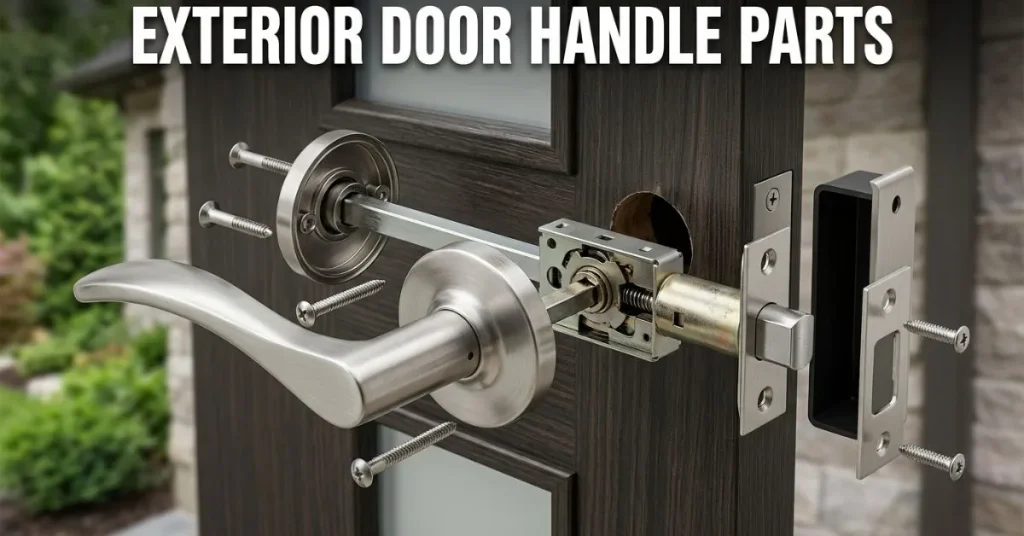
Exterior doors need hardware that can handle frequent use, weather exposure, and security demands. Their handle systems may also connect to stronger locking mechanisms. The visible handle is only one piece of that larger security system.
- Entry Handle
Meaning: An entry handle is exterior door hardware designed to work with an access or locking system. - Exterior Trim
Meaning: Exterior trim is the visible hardware fitted to the outside face of an entry door. - Interior Trim
Meaning: Interior trim is the matching hardware installed on the inside face of the door. - Keyed Entry Cylinder
Meaning: A keyed entry cylinder accepts a key and controls the lock mechanism. - Cylinder Collar
Meaning: A cylinder collar surrounds the lock cylinder and can provide support or decorative coverage. - Security Escutcheon
Meaning: A security escutcheon is a protective plate designed to surround and shield a lock area. - Exterior Rose
Meaning: An exterior rose is the decorative mounting plate surrounding a handle on the outside face. - Interior Rose
Meaning: An interior rose is the matching mounting plate surrounding the inside handle. - Reinforcement Plate
Meaning: A reinforcement plate strengthens the door area around hardware and can help resist damage. - Weather Seal
Meaning: A weather seal helps reduce the passage of air or moisture around compatible exterior hardware areas.
🏆 Best Choice: Security Escutcheon is the standout component for exterior doors because it combines a finished appearance with added protection around the lock area.
🔩 Door Latch & Frame Parts
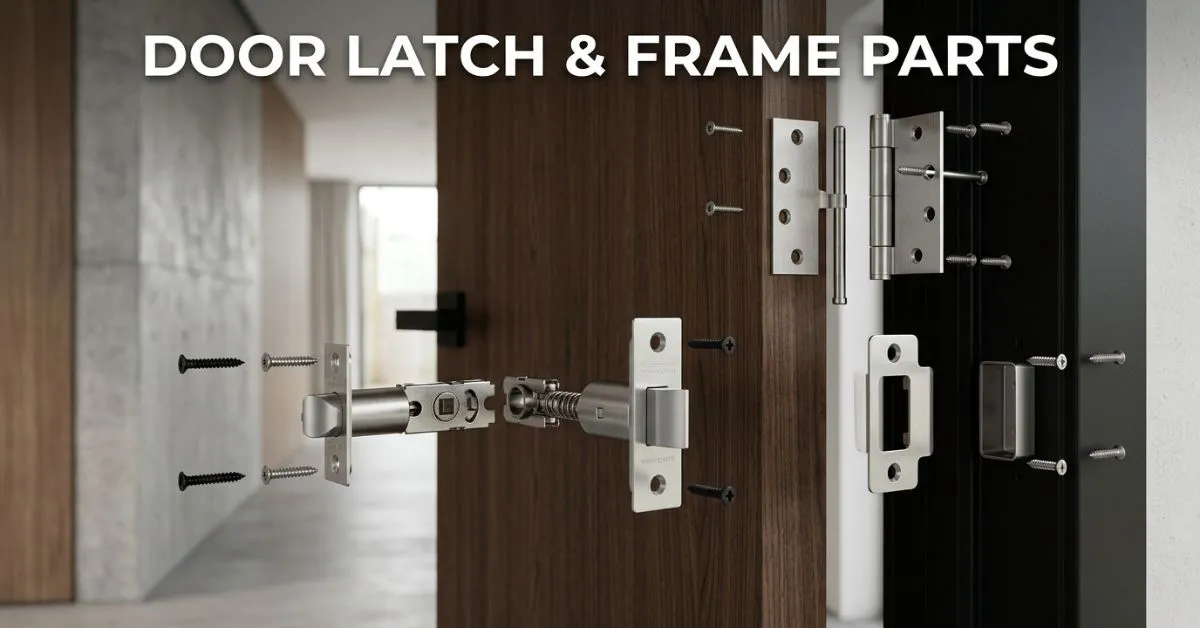
A handle cannot work alone. The latch needs a matching opening in the door frame so the closed door can stay in position. These frame and latch components are easy to overlook until something becomes misaligned.
- Latch Face
Meaning: The latch face is the visible metal surface of the latch assembly fitted against the door edge. - Latch Case Front
Meaning: The latch case front is the front section of the latch housing visible along the door edge. - Deadlatch
Meaning: A deadlatch is a spring latch design that includes a feature intended to help prevent unauthorized retraction. - Auxiliary Bolt
Meaning: An auxiliary bolt is a smaller locking component that can work alongside the main latch. - Strike Opening
Meaning: A strike opening is the cutout through which the latch or bolt enters the strike assembly. - Frame Recess
Meaning: A frame recess is the prepared opening in the door frame that receives a strike or locking component. - Dust Box
Meaning: A dust box is a small protective box installed behind some strike plates to contain the latch or bolt opening. - Strike Lip
Meaning: A strike lip is the projecting edge of some strike plates that helps guide the latch into position. - Door Jamb
Meaning: The door jamb is the vertical frame structure against which the door closes. - Strike Screws
Meaning: Strike screws secure the strike hardware to the door frame.
🏆 Best Choice: Door Jamb is the most useful term for beginners because it identifies the frame area where the latch and strike hardware meet.
🧰 Commercial Door Handle Parts
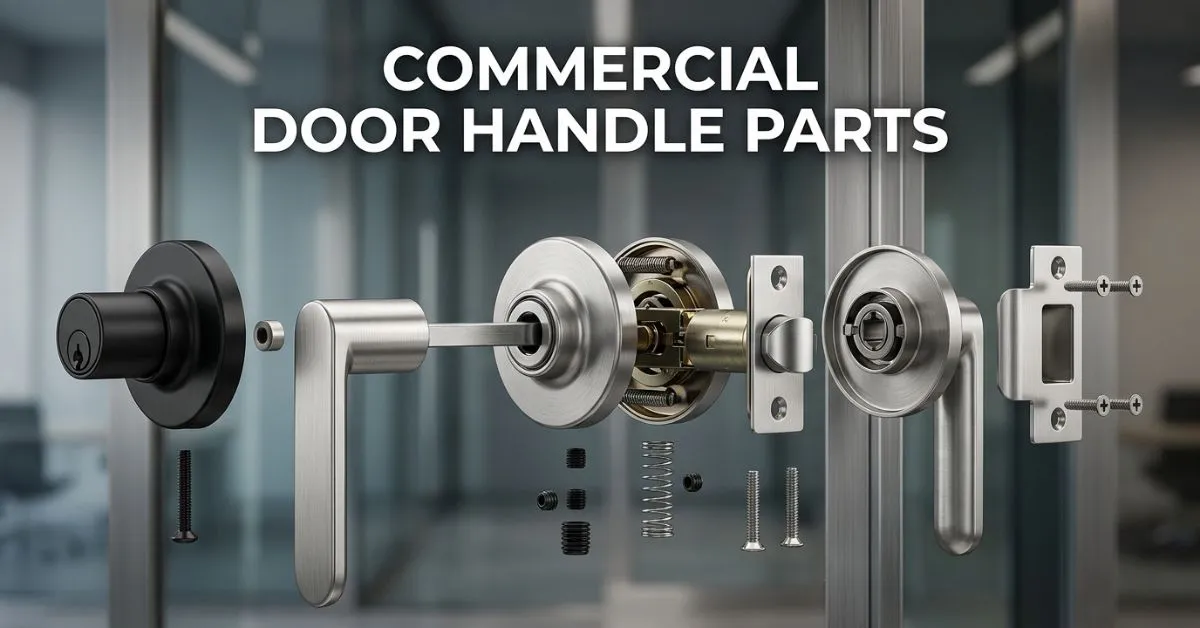
Commercial doors often use heavier hardware built for repeated daily use. Offices, stores, schools, and public buildings may also use different handle and locking systems. The names can overlap with residential hardware, but the construction is often more robust.
- Commercial Lever
Meaning: A commercial lever is a durable lever handle designed for frequent operation. - Heavy-Duty Rose
Meaning: A heavy-duty rose is a reinforced mounting plate designed for demanding door use. - Grade Lockset
Meaning: A grade lockset is a door-lock assembly classified according to a recognized performance standard. - Clutch Mechanism
Meaning: A clutch mechanism allows certain commercial levers to move without directly forcing the internal lock when appropriate. - Lever Return Spring
Meaning: A lever return spring helps restore a commercial lever to its original horizontal position. - Removable Core
Meaning: A removable core is a lock cylinder design that can be removed and replaced without changing the complete lock body. - Interchangeable Core
Meaning: An interchangeable core is a replaceable cylinder unit designed for compatible commercial lock systems. - Cylinder Housing
Meaning: A cylinder housing holds the lock cylinder securely within the larger hardware assembly. - Mounting Chassis
Meaning: A mounting chassis is the structural hardware that supports and connects commercial handle components. - Heavy-Duty Latch
Meaning: A heavy-duty latch is a stronger latch mechanism intended for frequent or demanding use.
🏆 Best Choice: Mounting Chassis is the most useful term for commercial hardware because it describes the structural foundation that supports several handle components.
📏 Door Handle Parts By Location
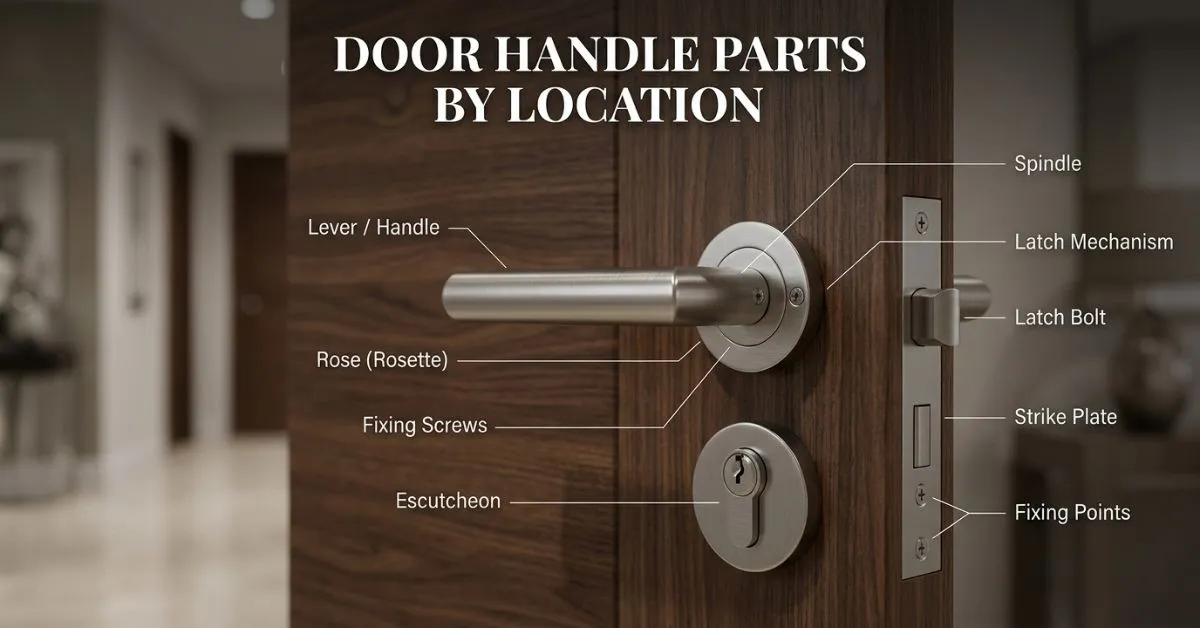
One easy way to learn hardware names is to organize them by where you can find them. Some parts sit on the handle, some inside the door, and others live on the frame. Location gives you a useful mental map when troubleshooting.
- Door Face
Meaning: The door face is the broad flat surface of the door where visible handle hardware is mounted. - Door Edge
Meaning: The door edge is the narrow side of the door where the latch faceplate is normally visible. - Handle Mounting Area
Meaning: The handle mounting area is the section of the door prepared to receive the handle assembly. - Lock Bore
Meaning: A lock bore is the drilled opening in the door that accommodates compatible lock or handle hardware. - Latch Bore
Meaning: A latch bore is the opening prepared to house the latch mechanism inside the door. - Cross Bore
Meaning: A cross bore is the larger drilled hole that passes through the door for many knob or lever assemblies. - Edge Bore
Meaning: An edge bore is the drilled passage from the door edge toward the main hardware opening. - Frame Stop
Meaning: A frame stop is the raised section of the frame that the closed door rests against. - Hinge Side
Meaning: The hinge side is the vertical edge of the door where its hinges connect it to the frame. - Latch Side
Meaning: The latch side is the opposite vertical edge where the handle and latch operate against the frame.
🏆 Best Choice: Latch Side is the simplest location term to remember when working on door handles because it immediately tells you which edge contains the operating hardware.
🧭 How To Identify A Door Handle Part
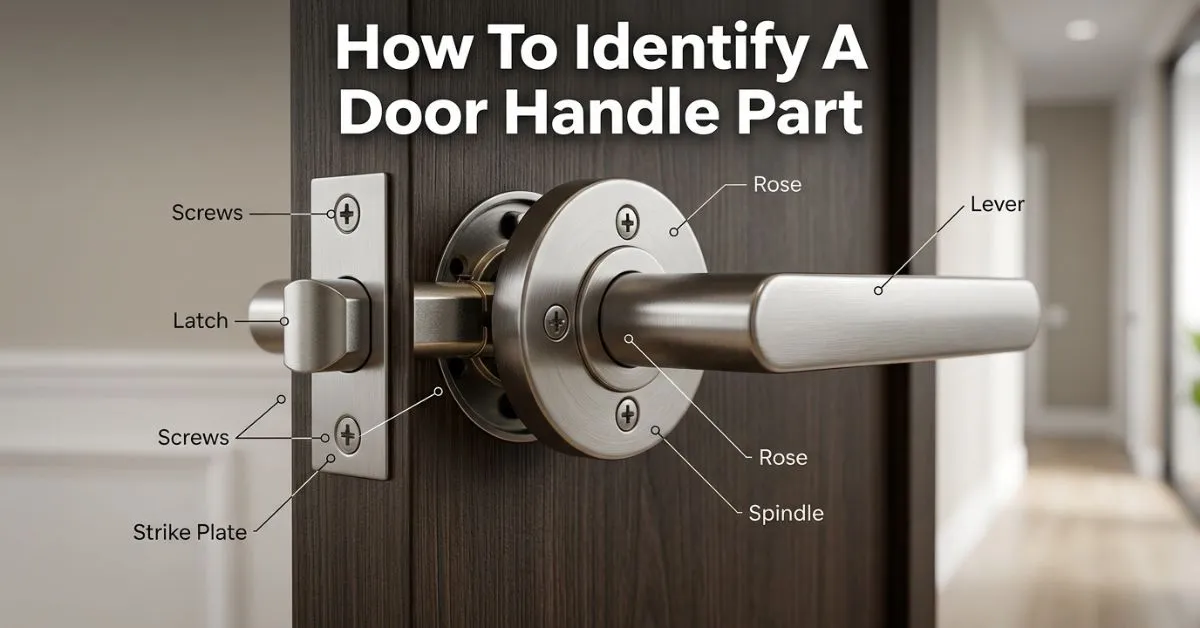
Finding the right replacement is much easier when you identify the part by its position, shape, and job. You do not always need to know the technical name first. Start by looking at what moves, what stays still, and where the component connects.
- Handle Type
Meaning: Handle type identifies whether the door uses a knob, lever, pull, or another operating style. - Mounting Pattern
Meaning: The mounting pattern describes the position and arrangement of the fixing points used by the hardware. - Backset
Meaning: Backset is the distance from the door edge to the center of the main handle or lock bore. - Door Thickness
Meaning: Door thickness is the measurement across the door and can affect which handle hardware will fit. - Spindle Size
Meaning: Spindle size describes the dimensions of the bar that transfers handle movement to the latch. - Latch Size
Meaning: Latch size refers to the dimensions of the latch body and its related door-edge fitting. - Hole Diameter
Meaning: Hole diameter is the width of a drilled opening prepared for a particular hardware component. - Handle Orientation
Meaning: Handle orientation describes how the lever or operating part is positioned for the door’s handing. - Finish
Meaning: Finish describes the surface treatment or appearance applied to visible metal hardware. - Hardware Brand
Meaning: Hardware brand identifies the manufacturer and can help you find matching replacement components.
🏆 Best Choice: Backset is the standout measurement to learn before buying replacement hardware because an incorrect backset can make an otherwise suitable handle incompatible.
🔥 Door Handle Terms People Search For In 2026
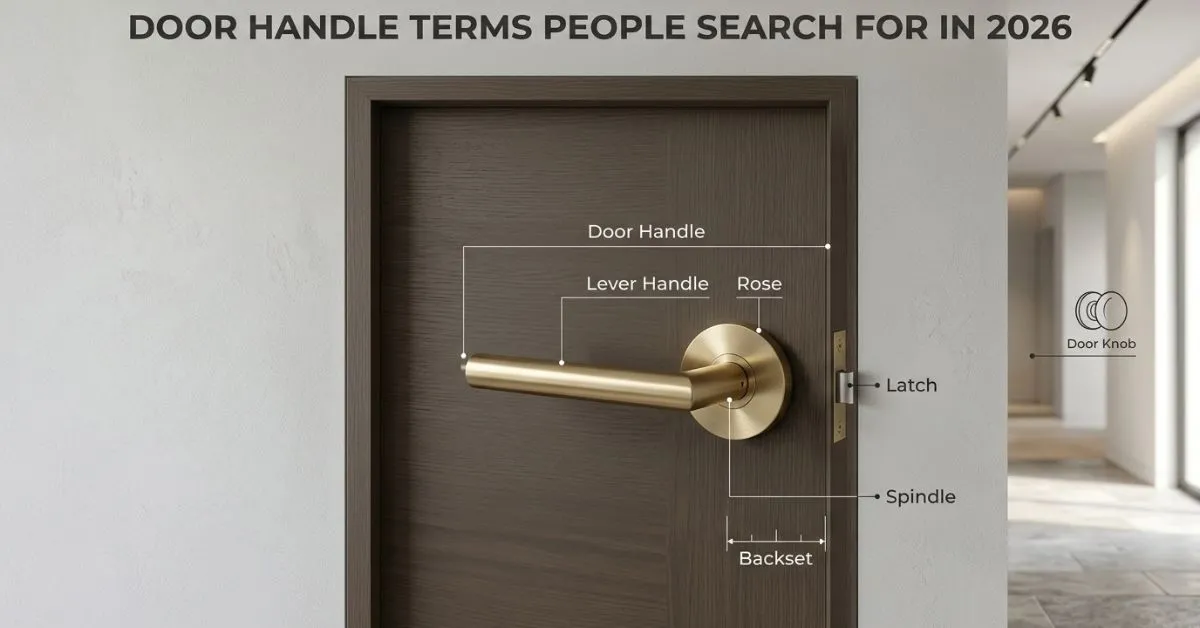
People looking for door hardware today often want more than a basic definition. They want to identify a broken component, compare styles, understand measurements, or find the right replacement. These ten terms are especially useful when turning a vague hardware problem into a specific search.
- Door Handle Replacement Parts
Meaning: This term describes individual components sold to repair or restore a compatible door handle. - Lever Handle Repair Kit
Meaning: A lever handle repair kit usually contains several pieces needed to fix common handle problems. - Door Handle Installation Kit
Meaning: An installation kit provides compatible hardware needed to mount a particular handle system. - Privacy Handle Set
Meaning: A privacy handle set combines an interior handle with hardware designed for basic room privacy. - Passage Handle Set
Meaning: A passage handle set operates a latch without providing a locking function. - Entry Handle Set
Meaning: An entry handle set combines exterior operating hardware with a locking arrangement for an entry door. - Dummy Handle
Meaning: A dummy handle is a fixed handle that provides a pull point without operating a latch. - Half-Dummy Handle
Meaning: A half-dummy handle is a single fixed handle mounted on one side of a door or cabinet-style opening. - Door Pull
Meaning: A door pull is a handle designed to be pulled rather than rotated to operate a latch. - Barn Door Handle
Meaning: A barn door handle is a visible pull-style fitting commonly used with sliding barn-style doors.
🏆 Best Choice: Door Handle Replacement Parts is the strongest search term for someone who already has a broken handle and wants to repair it instead of replacing everything.
🎯 How To Choose The Right Door Handle Part
Choosing hardware becomes simple when you focus on compatibility first and appearance second. A beautiful replacement is useless if its measurements or mechanism do not match your door.
1. Check the Door Thickness
Measure the complete thickness of the door. Handle sets are often designed for specific thickness ranges.
2. Measure the Backset
Measure from the door edge to the center of the main handle or lock bore. This measurement is called the backset.
3. Identify the Handle Style
Decide whether you have a knob, lever, pull handle, privacy handle, passage handle, or keyed entry handle.
4. Inspect the Latch
Look at the latch on the door edge. Its size and mounting style need to work with the replacement handle.
5. Check the Spindle
If the handle uses a spindle, inspect its shape and dimensions. The new handle must be compatible with the latch mechanism.
6. Look at the Mounting Holes
Existing holes can affect which replacement hardware will fit without additional drilling.
7. Match the Function
Do you need a lock? Privacy? Passage only? A fixed pull? Choosing the correct function prevents buying the wrong set.
8. Match the Finish
Once the mechanical details are correct, choose a finish that works with your door and surrounding hardware.
9. Compare the Full Set
Sometimes replacing one tiny component is cheaper. Other times, a complete compatible handle set makes more sense.
10. Keep the Old Part
Do not throw away the broken component immediately. It can help you compare dimensions, screw positions, shape, and mechanism with the replacement.
🏆 Best Choice: Door Thickness is the smartest first measurement because it quickly eliminates hardware that cannot properly fit your door.
FAQs:
What are the main door handle parts names?
The most common door handle parts names include the handle or knob, rose, backplate, spindle, latch, strike plate, screws, spring mechanism, and mounting hardware. Locking handles may also include a cylinder, thumbturn, escutcheon, or deadbolt.
Where can I find door handle parts names with pictures?
A door handle parts names with pictures guide can help you identify each component by its shape and position. Pictures are especially useful for small parts such as spindles, followers, fixing posts, springs, and retaining clips.
What is a door handle parts diagram?
A door handle parts diagram is a visual illustration showing the individual components of a door handle and how they fit together. It can make installation, repair, and replacement much easier for beginners.
What are the common interior door handle parts names?
Common interior door handle parts names include the lever or knob, rose, spindle, latch, mounting screws, return spring, privacy button, and privacy release. The exact parts depend on whether the door uses passage, privacy, or locking hardware.
What are the different types of door handle mechanisms?
The main types of door handle mechanisms include spring latch mechanisms, tubular latch systems, mortise lock mechanisms, privacy mechanisms, keyed entry systems, and passage mechanisms. Each design uses slightly different internal components.
What are the exterior door handle parts names?
Common exterior door handle parts names include the exterior handle, interior handle, rose or backplate, spindle, latch, strike plate, cylinder, cylinder collar, mounting screws, and security escutcheon. Exterior entry sets may also include a deadbolt or other locking components.
Where can I see a door lock parts names diagram?
A door lock parts names diagram can help you identify components such as the cylinder, latch bolt, deadbolt, strike plate, lock case, thumbturn, follower, and faceplate. This is useful when troubleshooting or replacing lock hardware.
What are the parts of a door handle and lock?
The main parts of a door handle and lock can include the handle, rose or backplate, spindle, latch, lock case, cylinder, thumbturn, strike plate, screws, springs, and internal follower. Not every door uses all of these components.
Conclusion:
Understanding door handle parts names turns a confusing hardware problem into a much simpler one. Once you know terms such as handle, rose, backplate, spindle, latch, strike plate, spring, escutcheon, and backset, you can describe what you need with much more confidence.
The biggest lesson is simple: do not judge a handle only by what you can see. The visible lever or knob is just one part of a larger system. Hidden components transfer movement, return the handle, hold the door closed, and connect the hardware to the frame.
When replacing a part, check the measurements first. Look at the handle style, door thickness, backset, latch, spindle, mounting holes, and function. Then worry about the finish and appearance.
In my years of working with naming and classification systems, I have found that clear terminology removes much of the frustration from everyday repairs. Once a part has a name, it becomes easier to find.
So next time a door handle gives you trouble, skip the guesswork. Name the part, check the fit, and make the fix with confidence.

I’m James Anderson, a names expert and author at Unlocknames.com, passionate about exploring name meanings, origins, history, and unique names ideas.