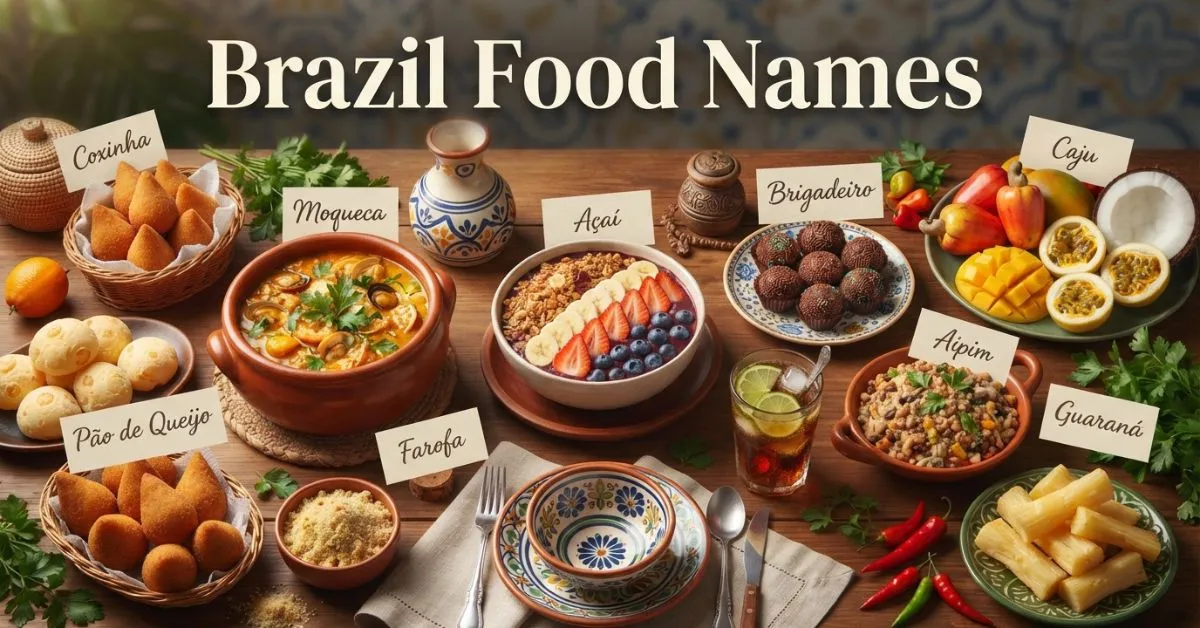
Brazil food names open the door to one of the world’s most colorful and exciting food cultures. Brazilian cuisine blends Indigenous traditions, Portuguese influence, African heritage, and many regional cooking styles. The result is a huge mix of flavors, textures, ingredients, and memorable words.
Maybe you are looking for a Brazilian food name for a pet, character, username, baby inspired nickname, food project, or simply because you love Brazilian cuisine. Some names sound cute and playful. Others feel bold, tropical, sweet, or exotic.
From famous Brazilian dishes to tropical fruits, desserts, drinks, and everyday ingredients, there are plenty of ideas to explore. Names such as Brigadeiro, Açaí, Caju, Moqueca, Farofa, and Coxinha can bring a fun Brazilian flavor to your naming project.
In this guide, you will discover creative choices grouped by style, so finding the right name feels easy. Keep scrolling and discover a delicious name with a little Brazilian sunshine behind it.
⚡ Quick Answer
Brazil food names are words inspired by Brazilian dishes, fruits, desserts, drinks, ingredients, and regional flavors. Popular choices include Açaí, Caju, Brigadeiro, Moqueca, Farofa, Tapioca, Goiaba, Feijoada, Pão de Queijo, and Coxinha. They can work as fun names for pets, characters, usernames, food brands, or creative projects.
🍽️ What Do “Brazil Food Names” Really Mean?
“Brazil food names” refers to names connected with foods and culinary traditions from Brazil. They can come from famous dishes such as feijoada and moqueca, sweet treats such as brigadeiro, or native and widely used ingredients such as açaí, caju, and mandioca.
Brazil is a large country, so its food culture varies from region to region. Coastal cooking often highlights seafood, while other areas are known for beans, cassava, corn, meat, fruits, and sweets.
These names are appealing because they often sound lively and distinctive. In my experience with food-inspired naming, words tied to a real culture usually feel more memorable because they carry a story, flavor, and sense of place.
🍬 Cute Brazilian Food Names
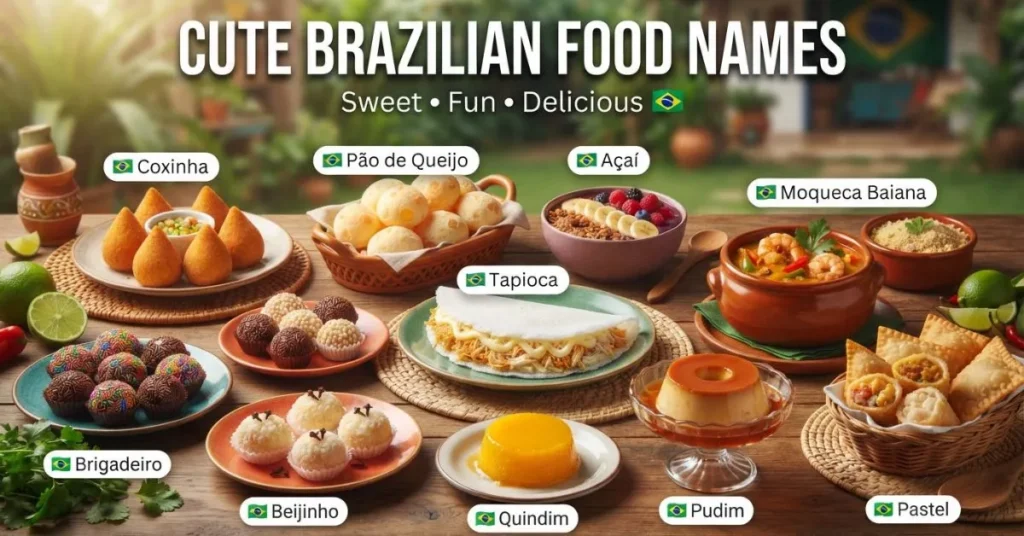
Cute food names can make excellent nicknames. They feel warm, friendly, and easy to remember. Brazilian sweets and small treats are especially useful here because many already have playful sounds that work beautifully as names.
- Brigadeiro
Meaning: A beloved Brazilian chocolate sweet with a rich, creamy texture and a naturally playful name. - Coxinha
Meaning: A popular Brazilian savory snack shaped somewhat like a chicken drumstick. - Pipoca
Meaning: The Portuguese word for popcorn, giving this name a cheerful and bouncy feel. - Paçoca
Meaning: A traditional Brazilian sweet made with ground peanuts and sugar, often associated with festive treats. - Goiabinha
Meaning: A cute form inspired by goiaba, the Portuguese name for guava. - Quindim
Meaning: A bright yellow Brazilian coconut dessert with a sweet, delicate personality. - Beijinho
Meaning: The name means “little kiss” in Portuguese and is also used for a coconut sweet. - Pudim
Meaning: Pudim is the Portuguese word for pudding and makes a soft, friendly food-inspired name. - Bolinha
Meaning: Bolinha means “little ball” in Portuguese and works nicely for a small, round treat or playful character. - Docinho
Meaning: Docinho means “little sweet,” making it a naturally affectionate Brazilian-inspired nickname.
🏆 Best Choice: Beijinho It is sweet in both sound and meaning, making it especially charming for a pet or affectionate nickname.
🌴 Tropical Brazilian Food Names
Brazil is famous for tropical fruits and ingredients that bring bright colors and fresh flavors to the table. These names feel sunny and energetic. They are great when you want something connected to nature, warmth, and tropical Brazil.
- Açaí
Meaning: Açaí is a dark purple berry from the Amazon region and is widely enjoyed in bowls, drinks, and desserts. - Caju
Meaning: Caju is the Portuguese name for cashew and also refers to the colorful cashew fruit. - Goiaba
Meaning: Goiaba means guava in Portuguese and gives a name a bright tropical character. - Maracujá
Meaning: Maracujá is the Portuguese word for passion fruit, known for its fragrant flavor and juicy pulp. - Manga
Meaning: Manga means mango in Portuguese and makes a short, colorful tropical-inspired name. - Mamão
Meaning: Mamão means papaya in Portuguese and gives the name a soft, playful sound. - Abacaxi
Meaning: Abacaxi is the Portuguese word for pineapple and creates a distinctive tropical name. - Pitanga
Meaning: Pitanga is a Brazilian fruit known for its small shape and vibrant red color. - Cupuaçu
Meaning: Cupuaçu is an Amazonian fruit related to cacao and valued for its aromatic pulp. - Graviola
Meaning: Graviola is the Portuguese name commonly used in Brazil for soursop, a tropical fruit with creamy flesh.
🏆 Best Choice: Pitanga It sounds distinctive while staying closely connected to Brazil’s colorful tropical fruit culture.
🍫 Brazilian Dessert Names
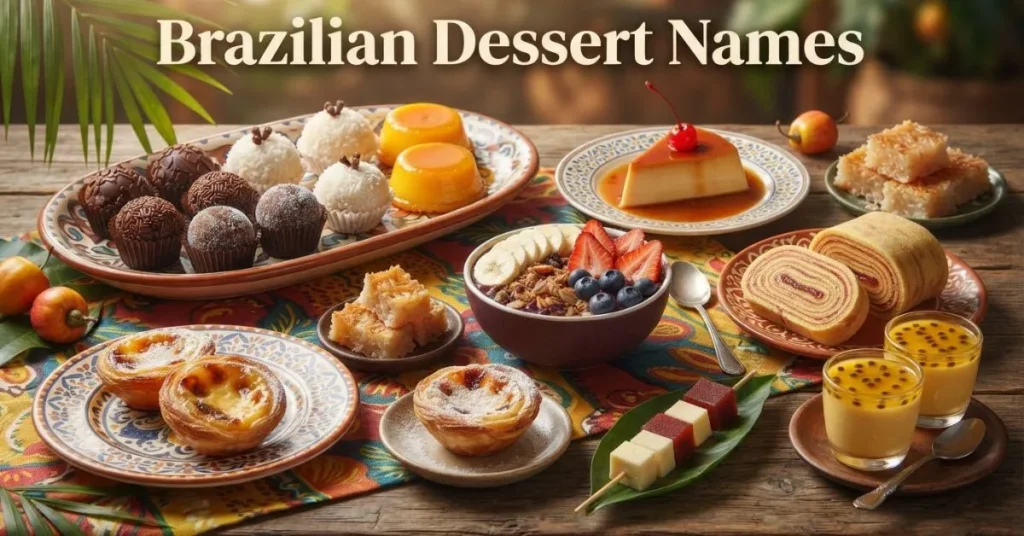
Brazilian desserts offer some of the most creative naming material. Many combine simple ingredients with rich textures and bold sweetness. These names are perfect when you want something delicious, memorable, and a little playful.
- Romeu
Meaning: Romeu appears in the famous Brazilian pairing “Romeu e Julieta,” traditionally combining cheese with guava paste. - Julieta
Meaning: Julieta completes the classic “Romeu e Julieta” pairing and gives the name a romantic Brazilian food connection. - Canjica
Meaning: Canjica is a traditional Brazilian sweet made with corn and commonly enjoyed during Festa Junina celebrations. - Cocada
Meaning: Cocada is a coconut-based Brazilian sweet with many regional variations. - Maria-Mole
Meaning: Maria-mole is a soft Brazilian confection with a light, marshmallow-like texture. - Pé-de-Moleque
Meaning: Pé-de-moleque is a traditional Brazilian peanut candy with a rich, crunchy character. - Bolo de Rolo
Meaning: Bolo de rolo is a famous Brazilian rolled cake strongly associated with Pernambuco. - Cartola
Meaning: Cartola is a traditional dessert combining banana, cheese, sugar, and cinnamon. - Ambrosia
Meaning: Ambrosia is a sweet milk-and-egg dessert enjoyed in Brazilian cuisine, especially in southern regions. - Manjar
- Meaning: Manjar is a creamy dessert name that gives a soft and elegant impression.
🏆 Best Choice: Cartola It has an unusual sound and a genuine Brazilian dessert connection, making it memorable without feeling ordinary.
🥘 Famous Brazilian Food Names
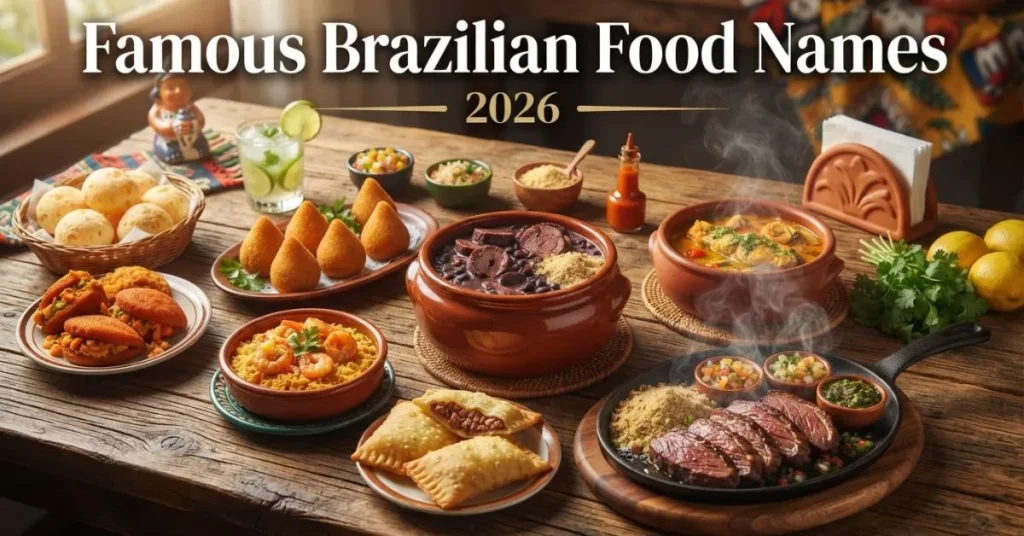
Some Brazilian foods are so well known that their names immediately suggest the country’s cuisine. These choices are ideal when you want your name to have a clear Brazilian food identity rather than a vague tropical feeling.
- Feijoada
Meaning: Feijoada is a famous Brazilian bean stew traditionally prepared with pork and commonly served with rice and other accompaniments. - Moqueca
Meaning: Moqueca is a Brazilian seafood stew associated with coastal cooking and prepared in different regional styles. - Farofa
Meaning: Farofa is a toasted cassava flour side dish that can be prepared with many different ingredients. - Tapioca
Meaning: Tapioca refers to food made from cassava starch and is used in Brazilian dishes and snacks. - Vatapá
Meaning: Vatapá is a creamy Brazilian dish associated with Bahia and made with ingredients such as bread, shrimp, coconut, and spices. - Acarajé
Meaning: Acarajé is a famous Bahian street food made from black-eyed pea dough and fried in dendê oil. - Tacacá
Meaning: Tacacá is a hot Amazonian soup made with ingredients including tucupi, jambu, and dried shrimp. - Pirão
Meaning: Pirão is a thick Brazilian side dish traditionally made by combining a liquid such as fish broth with cassava flour. - Arroz
Meaning: Arroz means “rice” in Portuguese and represents one of the most familiar foods in Brazilian meals. - Feijão
Meaning: Feijão means “beans” in Portuguese and is a staple ingredient in many Brazilian meals.
🏆 Best Choice: Moqueca It has a strong Brazilian identity and a smooth, memorable sound that works beautifully as a creative name.
🥥 Brazilian Ingredient Inspired Names
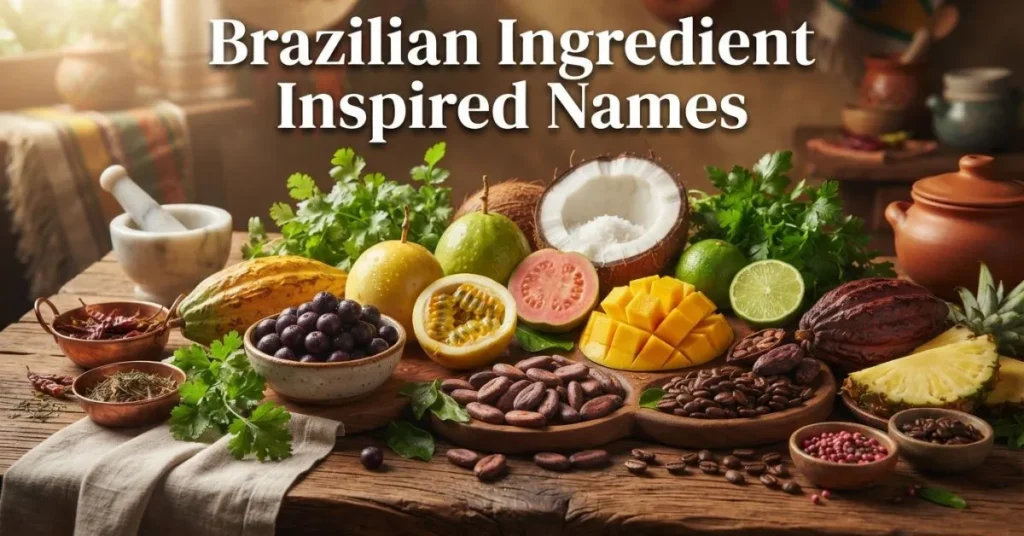
Sometimes the best name is not a finished dish. A simple ingredient can have an even more distinctive sound. Brazilian cooking uses many ingredients with deep regional and cultural connections, giving you plenty of fresh naming ideas.
- Mandioca
Meaning: Mandioca is the Portuguese name for cassava, a major food crop and important ingredient in Brazilian cuisine. - Dendê
Meaning: Dendê refers to palm oil widely used in Bahian cooking and gives a short, striking name. - Urucum
Meaning: Urucum is the Brazilian Portuguese name for annatto, a seed used for color and flavor. - Jambu
Meaning
🍕 Brazilian Street Food Names
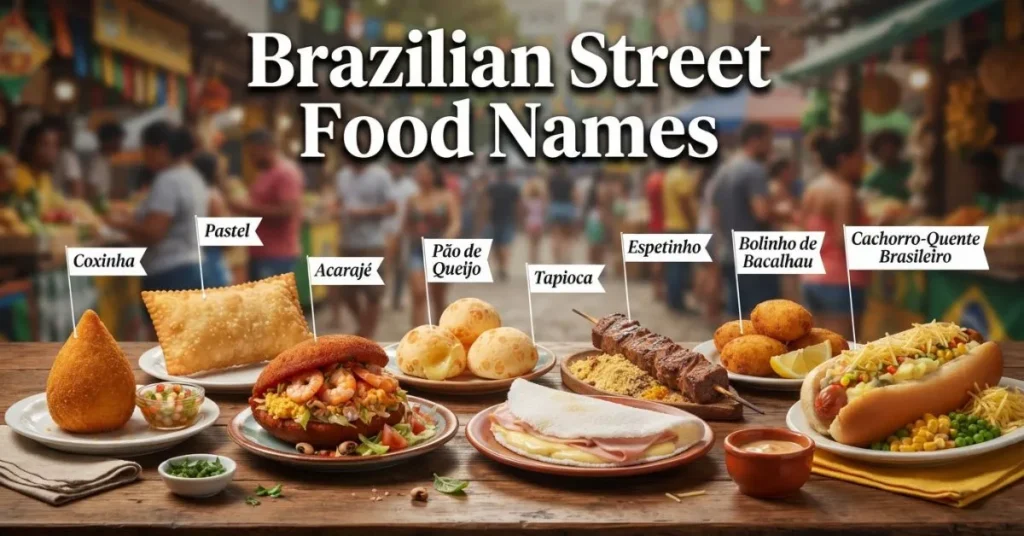
Brazilian street food is full of bold flavors, crisp textures, and fun names. These foods are often casual and social, making them a great source of playful naming ideas. If you want a name that feels lively rather than formal, this section has plenty of character.
- Pastel
Meaning: Pastel is a popular Brazilian fried pastry filled with savory or sweet ingredients. - Pão de Queijo
Meaning: Pão de queijo means “cheese bread” and refers to Brazil’s famous chewy cheese rolls. - Empada
Meaning: Empada is a small Brazilian savory pie with a pastry crust and flavorful filling. - Kibe
Meaning: Kibe is a Brazilian take on kibbeh, commonly enjoyed as a savory snack. - Bolinho
Meaning: Bolinho means “little cake” or “little ball-shaped snack” and is used for many Brazilian fried treats. - Esfiha
Meaning: Esfiha is a popular Brazilian savory pastry with roots in Middle Eastern cuisine. - Risole
Meaning: Risole is a Brazilian fried pastry usually filled with meat, cheese, shrimp, or other savory ingredients. - Bauru
Meaning: Bauru is a famous Brazilian sandwich named after the city of Bauru in São Paulo state. - Beirute
Meaning: Beirute is a Brazilian sandwich style influenced by Middle Eastern culinary traditions. - Lanche
Meaning: Lanche means “snack” in Portuguese and has a simple, friendly sound.
🏆 Best Choice: Bauru It feels like a real name while carrying a clear connection to Brazilian food and place.
🌽 Brazilian Festival Food Names
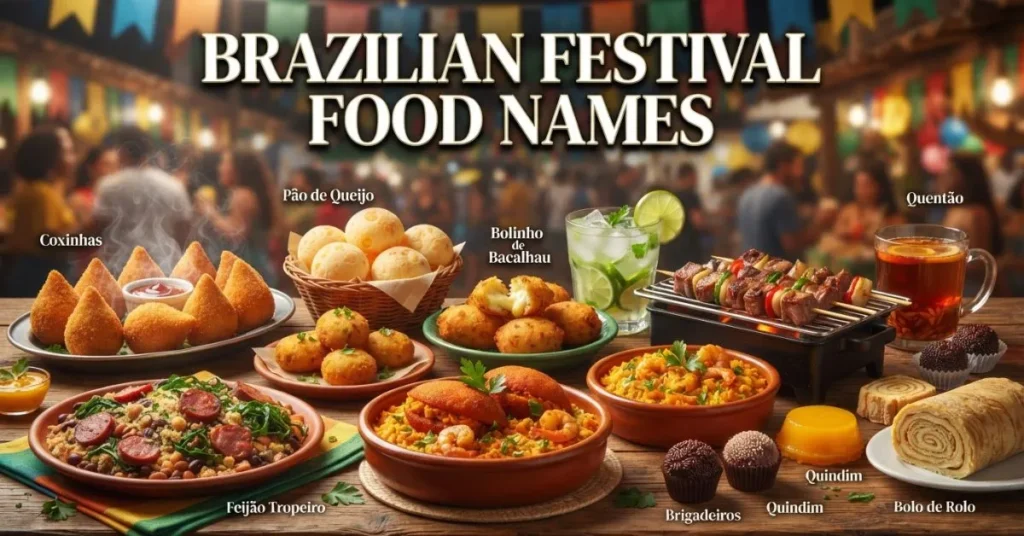
Brazilian festivals bring food, music, dancing, and colorful traditions together. Festa Junina is especially known for treats made with corn, peanuts, coconut, and other simple ingredients. These names have a warm, festive feeling and work well for creative projects.
- Pamonha
Meaning: Pamonha is a traditional Brazilian corn-based food often enjoyed during Festa Junina. - Curau
Meaning: Curau is a creamy corn dessert commonly served during Brazilian June festivals. - Milho Verde
Meaning: Milho verde means “green corn” and is a familiar Festa Junina food. - Arroz-Doce
Meaning: Arroz-doce means “sweet rice” and refers to a creamy rice dessert flavored in various ways. - Cuscuz
Meaning: Cuscuz is a widely enjoyed Brazilian food with different regional preparations. - Cocada Branca
Meaning: Cocada branca is a light-colored coconut sweet with a simple, classic character. - Quentão
Meaning: Quentão is a warm spiced drink traditionally associated with Festa Junina celebrations. - Batata-Doce
Meaning: Batata-doce means sweet potato and is enjoyed in many Brazilian preparations. - Pé-de-Moleque
Meaning: Pé-de-moleque is a traditional peanut candy often connected with Brazilian festive food.
🏆 Best Choice: Pamonha Its soft sound and strong Festa Junina connection make it a charming choice for a festive character or nickname.
🌿 Amazonian Food Names
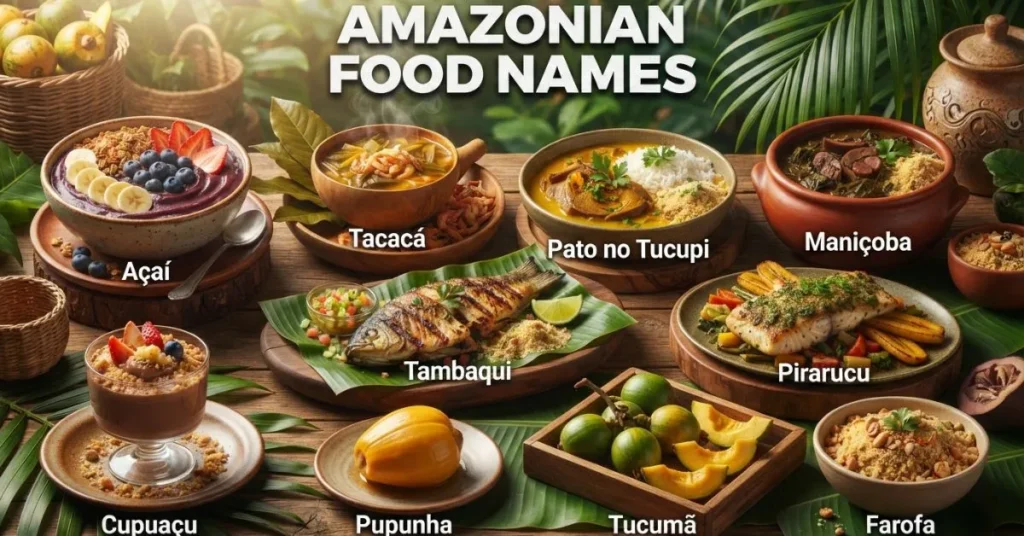
Brazil’s Amazon region has its own remarkable food traditions. Many ingredients are native to the region and appear in dishes that feel very different from everyday foods elsewhere. These names are ideal when you want something rare, earthy, and connected to Brazil’s natural world.
- Tucumã
Meaning: Tucumã is a palm fruit from the Amazon that is used in regional foods. - Bacaba
Meaning: Bacaba is an Amazonian palm fruit used to make a traditional beverage. - Taperebá
Meaning: Taperebá is a Brazilian name for a tropical fruit also known as cajá. - Cupuaçu
Meaning: Cupuaçu is an aromatic Amazonian fruit related to cacao and used in sweets, juices, and creams. - Pirarucu
Meaning: Pirarucu is a large freshwater fish native to the Amazon and an important regional food. - Tambaqui
Meaning: Tambaqui is a popular Amazonian freshwater fish valued in regional cooking. - Jaraqui
Meaning: Jaraqui is a small Amazonian fish commonly prepared in regional dishes. - Maniçoba
Meaning: Maniçoba is a traditional dish from northern Brazil made with processed cassava leaves. - Tucupi
Meaning: Tucupi is a bright yellow fermented cassava sauce central to several Amazonian dishes.
🏆 Best Choice: Buriti It has a smooth, elegant sound and a strong connection to one of Brazil’s iconic native palms.
🧀 Brazilian Comfort Food Names
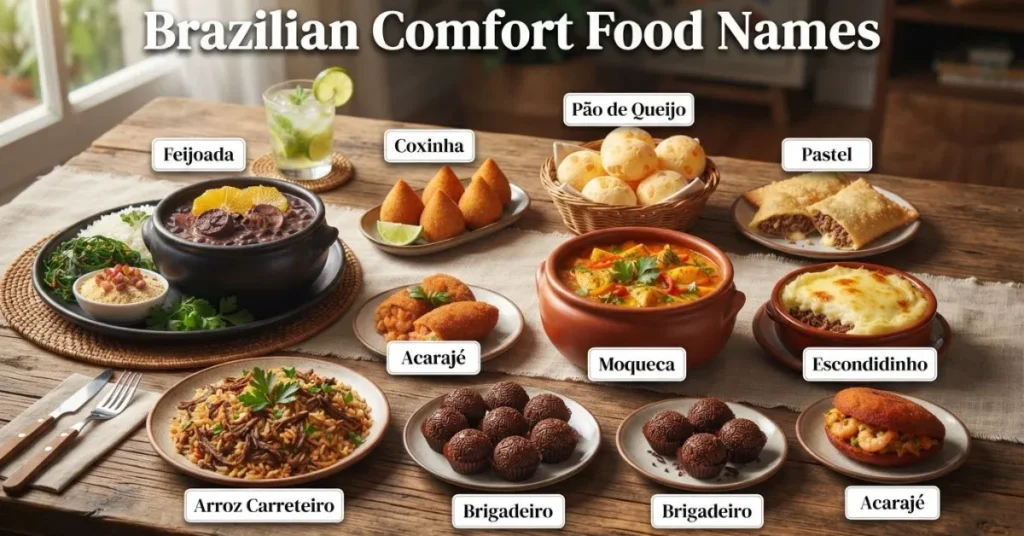
Comfort foods often feel familiar and warm. Brazilian cooking has many dishes that bring families and friends together around the table.
- Escondidinho
Meaning: Escondidinho means “little hidden one” and describes a layered Brazilian comfort dish with a filling hidden beneath mashed ingredients. - Virado
Meaning: Virado refers to a traditional São Paulo-style dish commonly prepared with beans and cassava flour. - Vaca Atolada
Meaning: Vaca atolada is a hearty Brazilian beef and cassava stew with a rich, rustic character. - Arroz Carreteiro
Meaning: Arroz carreteiro is a traditional rice dish historically associated with Brazilian cattle drivers. - Galinhada
Meaning: Galinhada is a comforting Brazilian chicken-and-rice dish prepared in many regional styles. - Baião de Dois
Meaning: Baião de dois is a northeastern Brazilian dish combining rice and beans with other flavorful ingredients. - Feijão Tropeiro
Meaning: Feijão tropeiro is a Minas Gerais dish made with beans, cassava flour, and other savory ingredients. - Rabada
Meaning: Rabada is a slow-cooked oxtail dish enjoyed in Brazilian cuisine. - Picadinho
Meaning: Picadinho means “little chopped pieces” and commonly refers to a Brazilian chopped-meat dish.
🏆 Best Choice: Tutu Short, catchy, and easy to remember, it works especially well as a playful nickname.
🍓 Brazilian Fruit Names
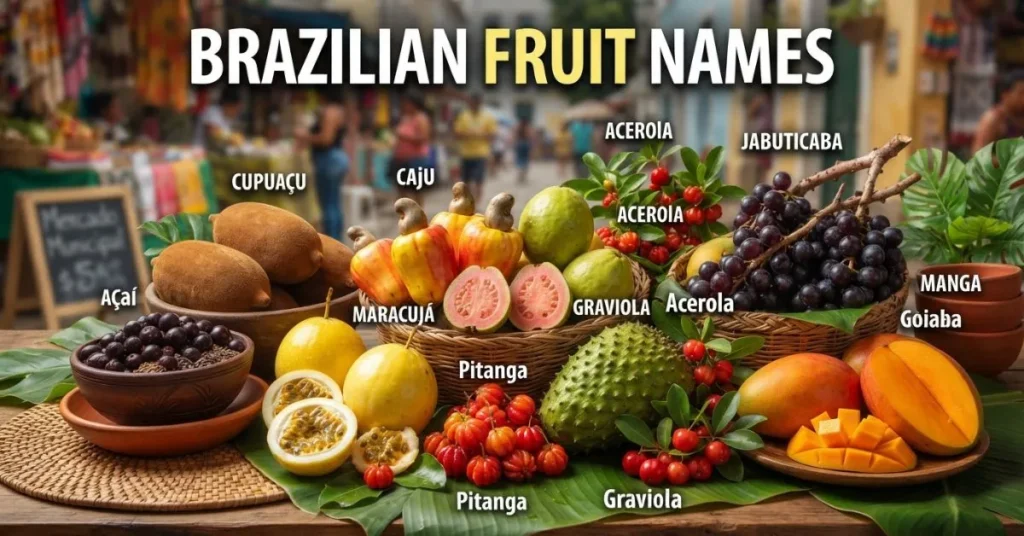
Brazil has an incredible range of native and tropical fruits. Many have unusual names that sound beautiful even when used outside the kitchen. Fruit names can add a natural, colorful feel to a pet name, character, username, or creative project.
- Jabuticaba
Meaning: Jabuticaba is a distinctive Brazilian fruit that grows directly on the trunk of its tree. - Cajá
Meaning: Cajá is a small tropical fruit with a sweet and tangy flavor. - Acerola
Meaning: Acerola is a bright red tropical fruit commonly used in juices and other foods. - Pitaya
Meaning: Pitaya refers to dragon fruit, a colorful fruit enjoyed in Brazil. - Seriguela
Meaning: Seriguela is a small tropical fruit popular in northeastern Brazil. - Mangaba
Meaning: Mangaba is a Brazilian tropical fruit used in juices, sweets, and other preparations. - Umbu
Meaning: Umbu is a tart fruit associated with northeastern Brazil and adapted to dry conditions. - Jenipapo
Meaning: Jenipapo is a tropical Brazilian fruit used in drinks, sweets, and traditional preparations. - Atemoia
Meaning: Atemoia is a sweet tropical fruit related to cherimoya and sugar apple. - Sapoti
Meaning: Sapoti is a soft tropical fruit with sweet flesh and a caramel-like flavor.
🏆 Best Choice: Jabuticaba It is unmistakably distinctive and tells a uniquely Brazilian food story.
🥩 Brazilian Grill & Meat Inspired Names

Brazil is famous for its churrasco tradition, where grilled meats are shared around the table. The names connected with this style of cooking often sound strong and memorable. They are a good match for bold characters, pets with big personalities, or food-themed usernames.
- Picanha
Meaning: Picanha is a prized Brazilian beef cut commonly cooked on the grill. - Fraldinha
Meaning: Fraldinha is the Brazilian Portuguese name for a flavorful beef cut often used for grilling. - Alcatra
Meaning: Alcatra is a Brazilian beef cut used in steaks and churrasco. - Maminha
Meaning: Maminha is a tender Brazilian beef cut often prepared on the grill. - Cupim
Meaning: Cupim is a flavorful cut of beef from the hump of zebu cattle, especially popular in Brazilian barbecue. - Linguiça
Meaning: Linguiça is a Portuguese-style sausage widely enjoyed in Brazilian cooking and churrasco. - Costela
Meaning: Costela means “rib” in Portuguese and is commonly associated with slow-cooked or grilled beef ribs. - Espetinho
Meaning: Espetinho means “little skewer” and refers to skewered foods commonly sold at Brazilian gatherings and street stalls. - Churrasco
Meaning: Churrasco refers to Brazilian-style barbecue and the social tradition surrounding grilled meat. - Carneiro
Meaning: Carneiro means “sheep” in Portuguese and can inspire a rustic food-themed name.
🏆 Best Choice: Picanha It is one of the strongest food words on the list and instantly suggests Brazilian churrasco culture.
🍚 Brazilian Rice & Bean Names
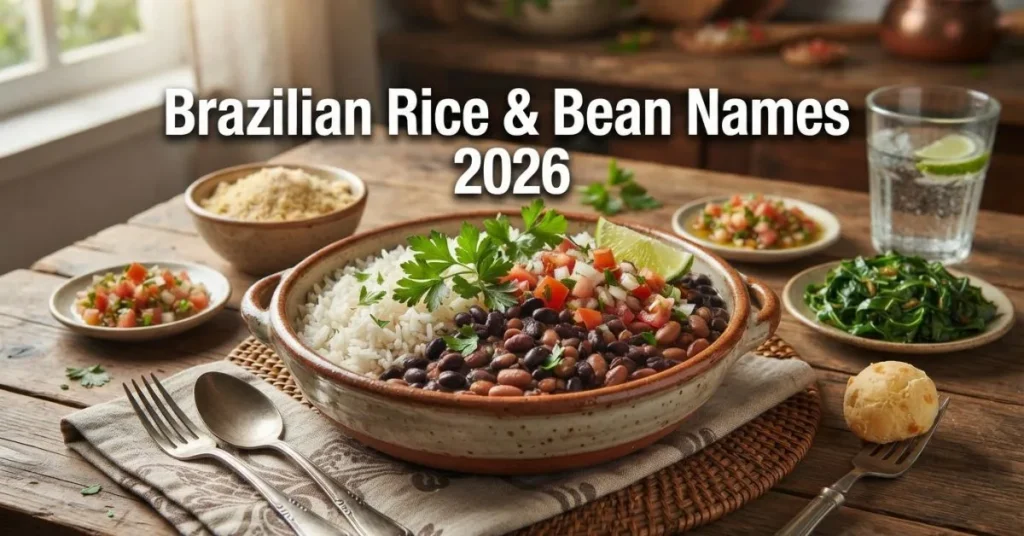
Rice and beans are a familiar part of everyday Brazilian meals. Their simplicity is part of their charm. These names may not sound as exotic as tropical fruits, but they connect directly with the comfort and rhythm of Brazilian home cooking.
- Biro-Biro
Meaning: Biro-Biro is a Brazilian-style rice dish named after a well-known football nickname. - Arroz Branco
Meaning: Arroz branco means “white rice” in Portuguese and represents a simple everyday staple. - Arroz à Grega
Meaning: Arroz à grega is a Brazilian rice preparation often made with colorful vegetables. - Arroz de Carreteiro
Meaning: This traditional rice dish has historic ties to traveling cattle workers in southern Brazil. - Feijão Preto
Meaning: Feijão preto means “black beans,” a key ingredient in traditional feijoada. - Feijão Carioca
Meaning: Feijão carioca refers to a common Brazilian bean variety with a speckled appearance. - Tropeiro
Meaning: Tropeiro refers to Brazil’s historic muleteer tradition and is closely linked with feijão tropeiro. - Viradinho
Meaning: Viradinho is a diminutive form connected to Brazilian dishes made with beans or vegetables and cassava flour. - Mexido
Meaning: Mexido means “mixed” or “stirred” in Portuguese and can describe a casual Brazilian mixed dish.
🏆 Best Choice: Baião Its short form sounds musical and memorable while connecting food with northeastern Brazilian culture.
🌶️ Spicy & Bold Brazilian Food Names
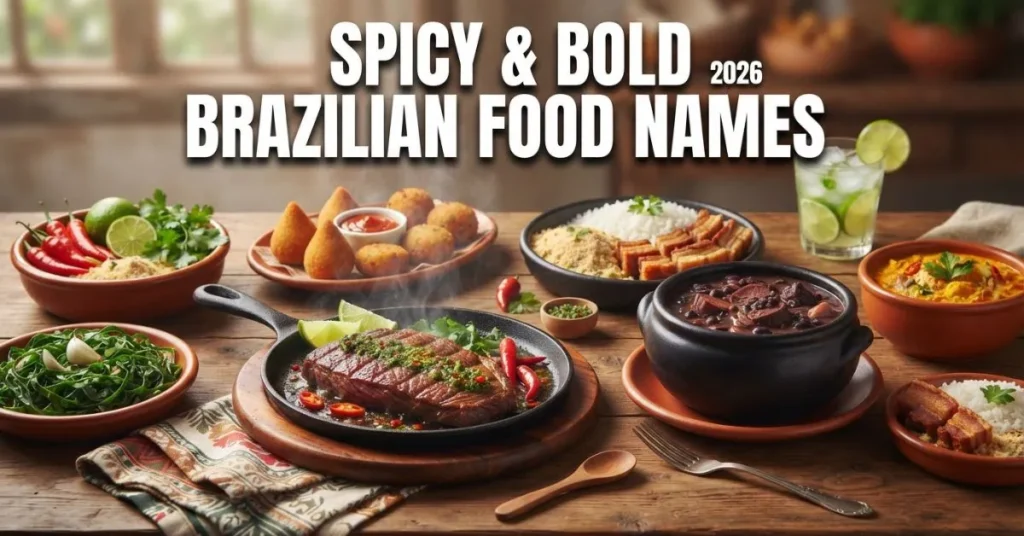
Some names should have attitude. Brazilian cuisine has plenty of peppers, sauces, herbs, and bold flavors to inspire them. This group is perfect when you want a name that feels energetic, fearless, or full of personality.
- Malagueta
Meaning: Malagueta is a small hot pepper widely used in Brazilian cooking. - Cumari
Meaning: Cumari is a Brazilian chili pepper known for its strong heat and fruity character. - Biquinho
Meaning: Biquinho is a small Brazilian pepper known for its distinctive shape and mild flavor. - Murupi
Meaning: Murupi is a Brazilian chili associated with Amazonian cuisine. - Dedo-de-Moça
Meaning: Dedo-de-moça is a popular Brazilian chili pepper whose name literally refers to a young woman’s finger. - Cominho
Meaning: Cominho means cumin in Portuguese and brings a warm spice-inspired feeling. - Coentro
Meaning: Coentro means cilantro or coriander leaves in Portuguese and is common in Brazilian cooking. - Alho
Meaning: Alho means garlic in Portuguese and gives the name a short, punchy sound. - Azeite
Meaning: Azeite means olive oil in Portuguese and creates a smooth culinary association. - Vinagrete
Meaning: Vinagrete is a Brazilian-style vinaigrette often served with grilled foods.
🏆 Best Choice: Biquinho It sounds cute at first, yet its pepper connection gives it plenty of personality.
🔥 Brazilian Food Names Trending for 2026
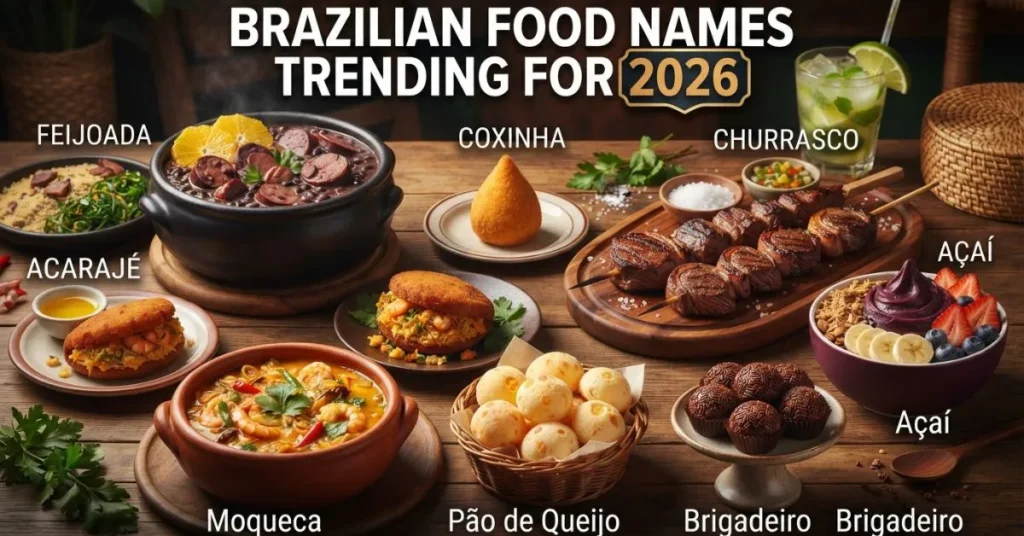
Food-inspired naming is moving toward words that are short, visual, memorable, and easy to say. Tropical ingredients and distinctive regional foods fit that style especially well. For 2026, names with strong identity and a real story are more useful than random invented words.
- Açaí
Meaning: Açaí connects a modern food favorite with Brazil’s Amazonian fruit culture. - Caju
Meaning: Caju is short, warm, and directly connected with Brazil’s cashew fruit. - Jambu
Meaning: Jambu offers an unusual sound backed by a real Amazonian culinary ingredient. - Pitanga
Meaning: Pitanga brings a bright fruit connection and a distinctly Brazilian feel. - Guaraná
Meaning: Guaraná has a recognizable Brazilian identity and works well as a memorable creative name. - Moqueca
Meaning: Moqueca feels elegant and distinctive while representing Brazil’s coastal cuisine. - Pamonha
Meaning: Pamonha gives a soft, playful sound with a strong festival-food connection. - Cocada
Meaning: Cocada is sweet, easy to say, and tied to Brazil’s coconut-based confectionery tradition. - Farofa
Meaning: Farofa is short, lively, and linked to an everyday Brazilian side dish.
🏆 Best Choice: Caju It has the ideal mix of simplicity, Brazilian identity, and modern naming appeal.
FAQs:
What are 50 Brazilian foods?
Brazil has a huge variety of regional foods. A list of 50 Brazilian foods can include traditional dishes, street foods, desserts, snacks, seafood, rice and bean dishes, and regional specialties from different parts of the country.
What is Brazilian food culture like?
Brazilian food culture is diverse and influenced by Indigenous, African, Portuguese, and other immigrant traditions. Ingredients such as beans, rice, cassava, corn, seafood, meat, tropical fruits, and coconut appear in many Brazilian dishes.
What is traditional Brazilian food?
Traditional Brazilian food includes dishes such as Feijoada, Moqueca, Acarajé, Farofa, Pão de Queijo, and Churrasco. Different regions of Brazil have their own specialties and cooking styles.
What are some famous Brazilian dishes?
Famous Brazilian dishes include Feijoada, Moqueca, Churrasco, Coxinha, Acarajé, and Pão de Queijo.
What Brazilian food should I try first?
If you are trying Brazilian cuisine for the first time, Feijoada, Pão de Queijo, Coxinha, Churrasco, and Brigadeiro are great options. They offer a taste of Brazil’s savory, snack, grilled, and sweet food traditions.
Conclusion:
Brazilian food names reflect the country’s rich culture, diverse regions, and love for bold and comforting flavors. From popular dishes like Feijoada and Coxinha to sweet favorites such as Brigadeiro and Pudim, there are many delicious names to discover.
IF you are exploring Brazilian cuisine for the first time, creating a food menu, or simply looking for inspiration, these Brazil food names offer a great introduction to the country’s culinary traditions. We hope this list helps you discover new Brazilian dishes and inspires you to try something delicious and different.

I’m Daniel Carter, a names expert and author at unlocknames.com, where I share helpful insights into name meanings, origins, and the stories behind them.