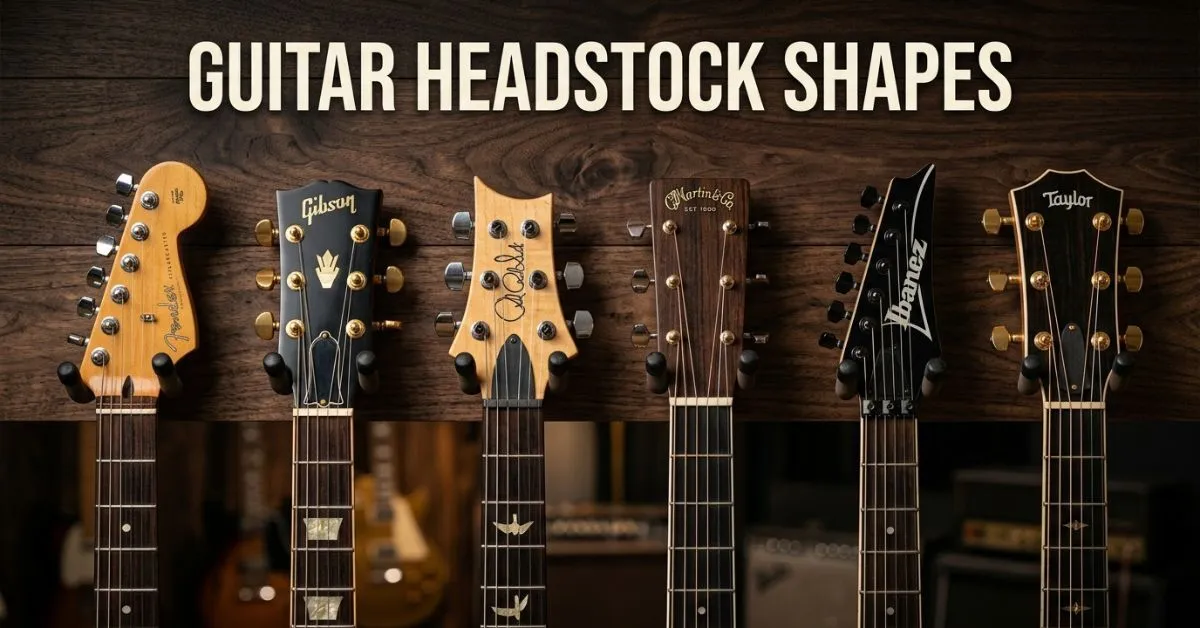
Guitar Headstock Shape Names can help you understand one of the most recognizable parts of a guitar’s overall design.
The headstock sits at the end of the neck and holds the tuning machines, but its shape also plays an important role in a guitar’s visual identity.
Different manufacturers and guitar styles use distinctive headstock designs, ranging from traditional and symmetrical shapes to bold, modern, and highly recognizable profiles.
Whether you’re a guitarist, collector, builder, designer, or simply interested in guitar anatomy, learning the different headstock shapes can make it easier to identify instruments and understand their design.
Some shapes are associated with classic electric guitars, while others are commonly found on acoustic, bass, vintage, or custom instruments.
In this guide, you’ll explore 160+ Guitar Headstock Shape Names, along with different types, styles, and design ideas.
From classic and familiar profiles to unusual and creative shapes, this collection will help you discover how much character a simple headstock can add to a guitar.
⚡Quick Answer
Guitar headstock shape names: describe the visual form, tuner layout, and construction style of the headstock. Common terms include paddle, 3+3, 6-in-line, slotted, pointed, diamond, reverse, and open-book styles. Some names are general design terms, while others describe famous guitar-maker or model shapes.
What Do Guitar Headstock Shape Names Really Mean?
Guitar headstock shape names are simple terms used to describe the shape and design of the wooden section at the end of a guitar neck. Some names describe the outline, such as paddle, pointed, diamond, or wave. Others describe how the tuning machines are arranged, such as 3+3 or 6-in-line. A few terms describe construction, especially slotted headstocks.
There is no single official list that every guitar maker follows. A luthier may call a design a paddle headstock, while another may use a more visual name such as crown, scroll, or spearhead.
In my experience studying guitar designs, the easiest way to understand a headstock is to look at two things first: its outer outline and its tuner layout. Those two details usually tell you much more than the name alone.
🎸 Classic Guitar Headstock Shape Names

Classic headstock designs have stayed popular because they are easy to recognize and work well with many guitar styles. Some are linked with older acoustic guitars, while others became famous through electric guitar history. The names below are useful when you want simple terms for common headstock forms.
- Paddle
Meaning: A broad, simple headstock with a mostly straight outer profile and plenty of open space. - 3+3
Meaning: A headstock with three tuning machines on each side, creating a balanced and traditional look. - 6-in-Line
Meaning: Six tuning machines sit in one straight row along a single side of the headstock. - Diamond
Meaning: A headstock design with a central point or diamond-like outline that gives it a sharp visual identity. - Crown
Meaning: A curved upper edge creates a crown-like silhouette that feels decorative without being overly complex. - Pointed
Meaning: One or more sharp tips give the headstock a bold shape that often suits modern guitars. - Rounded
Meaning: Soft curves replace hard corners, giving the headstock a smooth and friendly appearance. - Flat-Top
Meaning: The upper edge stays mostly straight, creating a clean and uncomplicated outline. - Tapered
Meaning: The headstock gradually becomes narrower toward one end instead of keeping a constant width. - Wedge
Meaning: The outline resembles a wedge, with angled sides that create a compact and directional appearance.
🏆 Best Choice: Paddle is the standout classic choice for a clean, simple design. It gives a custom guitar plenty of room for a logo, artwork, or other details without making the headstock look crowded.
🪕 Acoustic Guitar Headstock Shape Names
Acoustic guitars often use headstocks with a warmer, more traditional appearance. The shape can also relate to how the strings, tuners, and neck are built. Some acoustic designs use solid faces, while others use slots that make the construction instantly recognizable.
- Slotted
Meaning: String ends pass through narrow openings in the headstock, creating a traditional acoustic-guitar appearance. - Slotted 3+3
Meaning: A slotted headstock combines open string slots with three tuners arranged on each side. - Solid Acoustic
Meaning: A solid wooden face holds the tuning machines without the long string slots seen on traditional slotted designs. - Classical
Meaning: A traditional nylon-string layout usually features slots and rollers designed for classical-style tuning machines. - Slotted Paddle
Meaning: A broad paddle-like outline is combined with openings that allow the strings to pass through the headstock. - Compact Acoustic
Meaning: A shorter headstock outline keeps the design visually small and balanced on a smaller acoustic guitar. - Wide Acoustic
Meaning: A broader headstock gives the neck a spacious appearance and leaves more room around the tuning machines. - Narrow Acoustic
Meaning: A slimmer outline creates a lighter visual profile while keeping the tuning hardware close together. - Open-Slot
Meaning: Large visible openings form the main visual feature of the headstock and give it a classic handcrafted feel. - Vintage Acoustic
Meaning: This descriptive name fits headstocks that use older-looking proportions, curves, and traditional tuner layouts.
🏆 Best Choice: Slotted 3+3 is a strong choice when you want an instantly recognizable acoustic-guitar appearance. Its open construction and balanced tuner arrangement give it a classic handmade feel.
⚡ Electric Guitar Headstock Shape Names
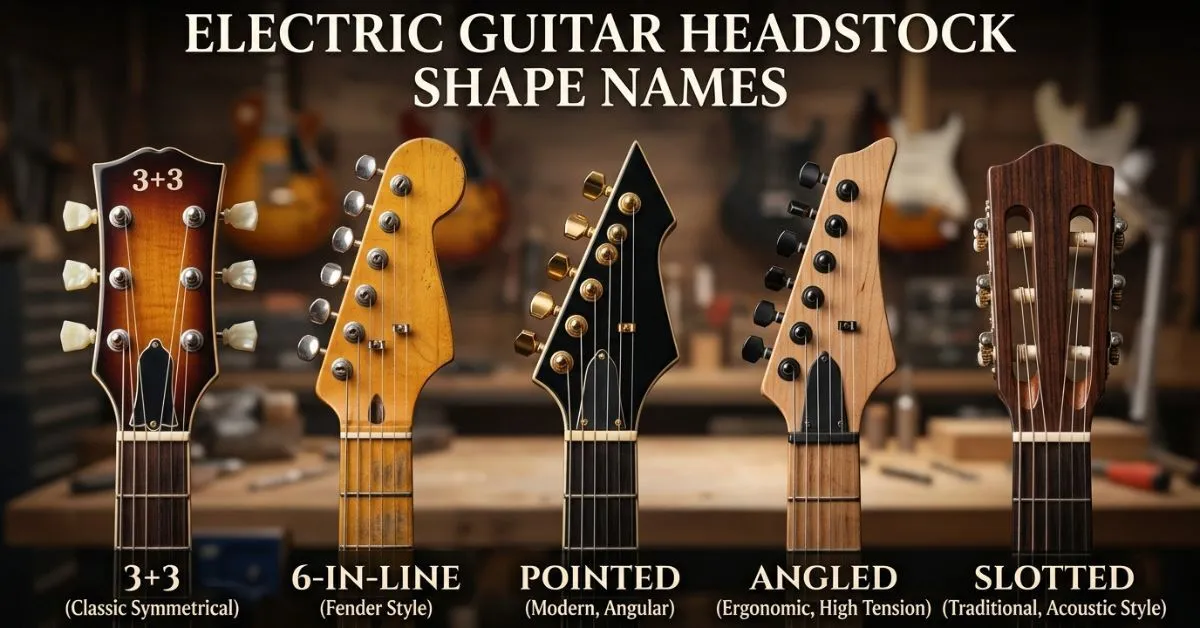
Electric guitars allow much more freedom with headstock design. Makers can use long points, sharp angles, unusual curves, or simple straight edges. The tuner arrangement also has a major effect on the overall personality of the instrument.
- Long Point
Meaning: A stretched headstock ends in a noticeable point, creating a dramatic and aggressive silhouette. - Short Point
Meaning: A compact pointed tip adds attitude without making the headstock look extremely long. - Reverse
Meaning: The usual visual direction of the headstock is flipped to create a distinctive reversed appearance. - Reverse 6-in-Line
Meaning: Six tuners remain on one side, but the headstock uses a reversed orientation for a different visual effect. - Offset
Meaning: The outline or tuner placement shifts away from perfect symmetry, creating a more unusual appearance. - Angled
Meaning: Strong diagonal edges give the headstock a modern shape with a clear sense of direction. - Sharp-Tip
Meaning: One or more narrow tips make the headstock look sleek, energetic, and highly defined. - Forked
Meaning: A split or divided upper outline creates two noticeable visual points. - Spearhead
Meaning: A narrow pointed silhouette resembles the shape of a spearhead and gives the guitar a strong visual edge. - Blade
Meaning: A long, narrow outline creates a sleek headstock that looks almost blade-like from the front.
🏆 Best Choice: Long Point works especially well when the goal is a bold electric-guitar look. Its extended silhouette creates a strong visual statement even before the guitar is plugged in.
🛠️ Custom Guitar Headstock Shape Names
Custom guitar builders are not limited to a small set of traditional outlines. A headstock can be designed around the body, the player’s taste, a theme, or the overall character of the instrument. These descriptive names can help when discussing an original design.
- Wave
Meaning: Smooth rising and falling curves create a flowing outline instead of a straight or sharply pointed edge. - Scroll
Meaning: A curled detail or spiral-inspired edge gives the headstock a decorative handcrafted appearance. - Teardrop
Meaning: The outline becomes wider at one end and narrower at the other, creating a teardrop-like profile. - Crescent
Meaning: A curved outer edge creates a crescent-inspired silhouette with a softer visual character. - Arch
Meaning: A rounded upper section forms a simple arch that gives the headstock a refined appearance. - Shield
Meaning: The outer profile resembles a shield, with a broad upper area and a controlled lower point. - Heartline
Meaning: Curved edges create a heart-inspired silhouette that works well for artistic or personalized instruments. - Ribbon
Meaning: Long flowing curves make the headstock appear light and decorative, almost like a folded ribbon. - Fan
Meaning: The headstock expands outward toward the top, creating a fan-like visual shape. - Swoop
Meaning: A strong curved edge moves upward or downward in one smooth sweep, giving the design extra motion.
🏆 Best Choice: Wave is a standout custom shape because it feels creative without becoming too complicated. It suits builders who want an original outline with smooth, natural movement.
🖤 Vintage Inspired Guitar Headstock Shape Names
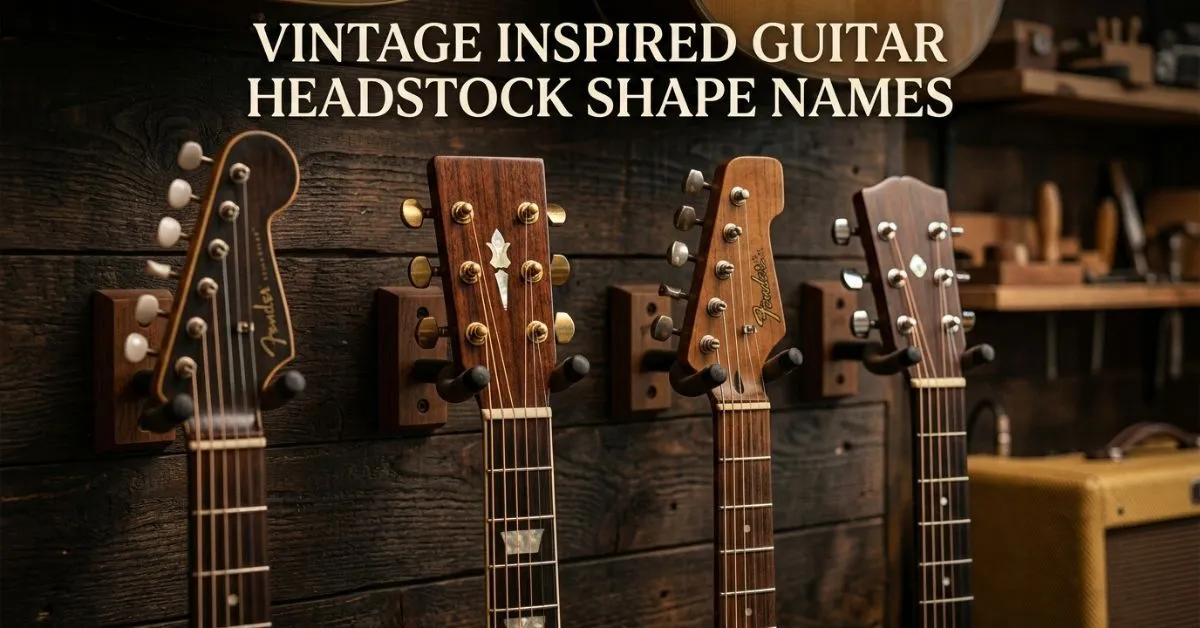
Vintage-inspired headstocks borrow visual ideas from older instruments without needing to copy one exact guitar. Curved edges, simple proportions, aged finishes, and traditional tuner layouts can all create a vintage mood. These descriptive names are useful when planning a retro-style design.
- Open-Book
Meaning: The upper outline curves outward on both sides and resembles the shape of an open book. - Old-School Paddle
Meaning: A broad and simple paddle profile gives the instrument a straightforward traditional appearance. - Retro Diamond
Meaning: A diamond-like center profile adds a classic decorative detail to an otherwise simple headstock. - Classic Scroll
Meaning: A curled edge or ornamental detail creates a handcrafted look associated with older instrument designs. - Heritage
Meaning: This descriptive style suggests traditional proportions and details inspired by earlier guitar construction. - Antique Curve
Meaning: Gentle rounded edges create an aged visual character without relying on sharp modern lines. - Classic Crown
Meaning: A decorative curved top gives the headstock a formal and traditional appearance. - Old-World Slotted
Meaning: Traditional slots and vintage-style proportions create a strong historical acoustic-guitar feel. - Retro Wing
Meaning: Curved side sections spread outward like small wings, giving the headstock a balanced vintage silhouette. - Heritage Point
Meaning: A traditional-looking outline finishes with a controlled point for a subtle mix of old and new design.
🏆 Best Choice: Open-Book is an excellent vintage-inspired description because the silhouette is easy to recognize and visually distinctive. It works especially well when describing classic-looking acoustic headstocks.
🧭 How To Identify Guitar Headstock Shape Names
Identifying a headstock becomes much easier when you stop looking at the whole guitar at once. Focus on the outline first, then check the tuner position, string path, and overall proportions. A simple visual description can often tell you what type of design you are looking at.
- Twin-Curve
Meaning: Two matching curves create a balanced upper outline that feels smooth and symmetrical. - Center Peak
Meaning: The middle of the upper edge rises into one clear peak, giving the design a focused center. - Split Peak
Meaning: Two raised tips create a divided crown-like outline across the top. - Shouldered
Meaning: Small raised sections near the upper corners create a shape that looks wider through the shoulders. - Narrow Spine
Meaning: The center section stays visually slim while the outer edges provide most of the headstock’s width. - Broad-Shoulder
Meaning: A wide upper area gives the headstock a strong and substantial appearance. - Cornered
Meaning: Straight sections meet at visible corners rather than flowing into soft curves. - Soft-Angle
Meaning: Gentle angled edges create definition while avoiding extremely sharp points. - Neck-Taper
Meaning: The headstock gradually expands from the neck before reaching its wider upper section. - Balanced Oval
Meaning: Rounded edges form an oval-inspired outline with no dominant point or corner.
🏆 Best Choice: Twin-Curve is a useful description when the shape is defined mainly by symmetry and smooth edges. It helps explain a design without relying on a brand or model name.
🎨 Modern Guitar Headstock Shape Names
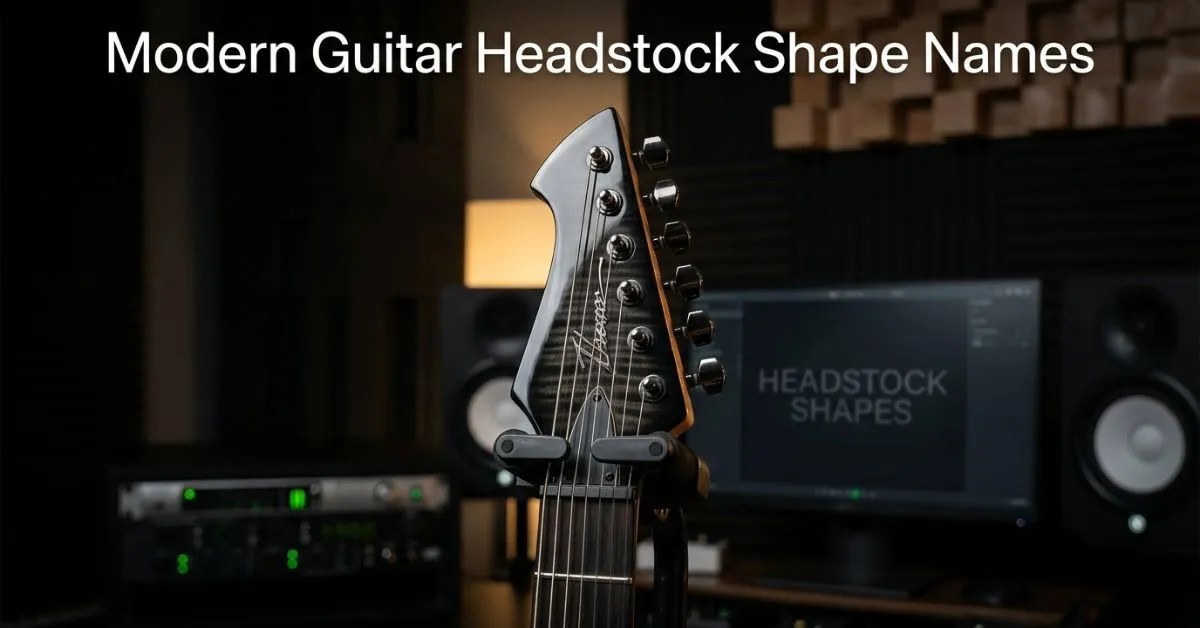
Modern guitar design often favors clean lines, controlled angles, and unusual proportions. The goal is not always to make the headstock louder visually. Sometimes a small change in geometry is enough to make the instrument feel completely different.
- Stealth
Meaning: A low-profile outline with restrained edges creates a sleek and understated appearance. - Arrowline
Meaning: Angled edges guide the eye toward the upper end, giving the design a forward-moving look. - Vector
Meaning: Clean directional lines create a technical and contemporary visual character. - Aero
Meaning: Smooth, streamlined curves make the headstock appear light and aerodynamic. - Monolith
Meaning: A solid, simple outline gives the headstock a strong single-piece visual presence. - Vertex
Meaning: Several straight edges meet around a noticeable point, creating a geometric modern profile. - Contour
Meaning: Carefully shaped curves define the outside edge without depending on one large point. - Linear
Meaning: Straight edges and controlled proportions give the headstock a minimal modern appearance. - Prism
Meaning: Multiple angled surfaces or visual sections create a faceted geometric impression. - Apex
Meaning: The outline builds toward a clear high point that becomes the main visual feature.
🏆 Best Choice: Contour fits a modern guitar especially well when you want clean design without an overly aggressive shape. It sounds descriptive while focusing on the actual geometry.
🔧 Guitar Headstock Shapes By Tuner Layout
The tuner layout is one of the fastest ways to describe a headstock. Two guitars can have very different outlines but still share the same basic tuner arrangement. Looking at this detail first can make identification much easier.
- 2+2
Meaning: Two tuning machines sit on each side, creating a compact four-tuner arrangement often associated with four-string instruments. - 4+2
Meaning: Four tuners occupy one side while two sit on the opposite side, producing an uneven six-string layout. - 5+1
Meaning: Five tuning machines line one side while a single tuner sits on the other. - 1+5
Meaning: One tuner appears on one side and five are positioned along the opposite side. - Bass 3+1
Meaning: A four-string bass layout places three tuning machines on one side and one on the other. - Bass 2+2
Meaning: Four bass tuners are divided evenly between both sides of the headstock. - Six-Per-Side
Meaning: All six tuning machines sit along one side, creating a highly organized straight-line appearance. - Three-Per-Side
Meaning: Three tuners sit on each side, producing a balanced left-and-right arrangement. - Inline
Meaning: The tuning machines follow one continuous row instead of being split across both sides. - Staggered
Meaning: Tuning machines sit at slightly different heights or positions rather than forming one perfectly even row.
🏆 Best Choice: Staggered is especially useful when a headstock looks familiar at first glance but the tuner positions do not form a standard straight pattern. It describes the layout without forcing it into the wrong category.
🌙 Unusual & Artistic Guitar Headstock Shape Names
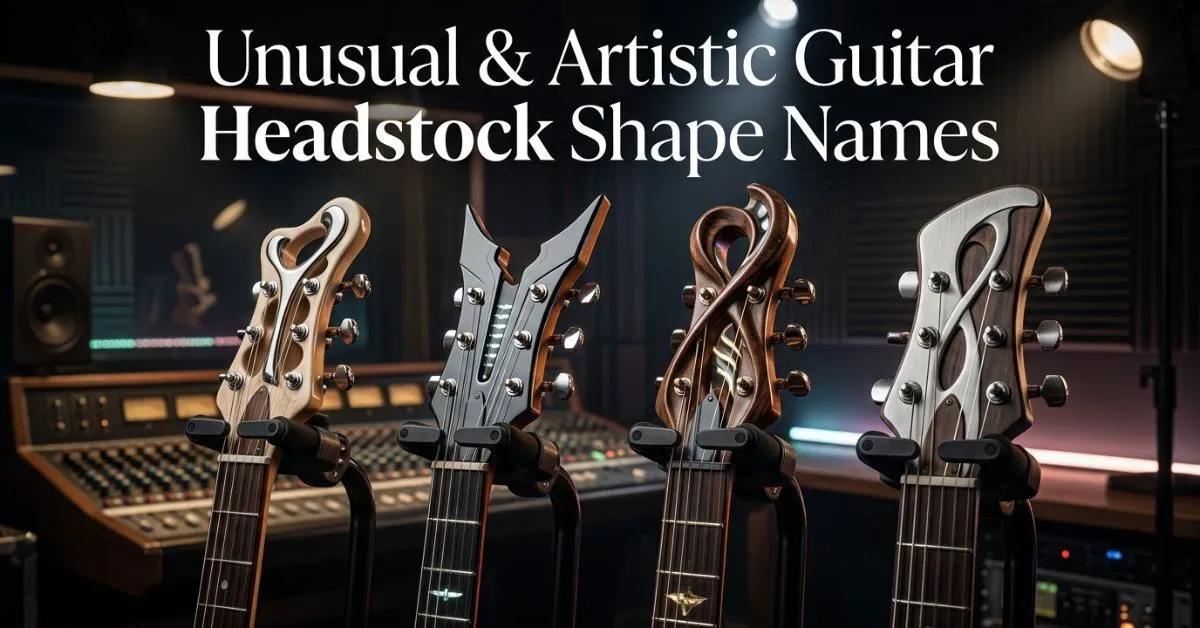
Some headstocks are designed to become part of the guitar’s visual identity. These shapes may use unusual curves, negative space, or decorative outlines. They are especially useful inspiration for custom builders and concept designs.
- Comet
Meaning: A narrow body with a sweeping extension creates the visual impression of an object moving through space. - Halo
Meaning: A rounded outer form surrounds the central area with a soft, almost ring-like visual effect. - Flamecrest
Meaning: Rising curved edges create a lively silhouette inspired by the movement of flames. - Lotus
Meaning: Layered curves spread outward in a shape inspired by a blooming flower. - Falcon
Meaning: Sweeping upper edges suggest the wings or motion of a bird in flight. - Talon
Meaning: A curved pointed section gives the headstock a claw-like visual character. - Crownwave
Meaning: A mixture of raised points and flowing curves creates a decorative royal-style outline. - Moonhook
Meaning: One curved section bends inward like a crescent with a small hook. - Ember
Meaning: A compact pointed form gives the design a small but energetic visual presence. - Orbit
Meaning: Rounded edges and curved lines create a circular sense of movement around the center.
🏆 Best Choice: Lotus is a memorable artistic shape name because it suggests layered curves and natural beauty. It works well for a handcrafted or visually expressive instrument.
🏆 Popular Guitar Headstock Styles To Know
There is no single headstock shape that works for every guitar. Players may prefer a design because of its appearance, tradition, construction, tuner arrangement, or the way it matches the rest of the instrument. Knowing the common style families makes guitar research much easier.
- Traditional 3+3
Meaning: Three tuners on each side create a familiar balanced layout found across many guitar designs. - Straight Six
Meaning: Six tuning machines run in one row, giving the headstock a clean and highly organized profile. - Classic Slotted
Meaning: Open string slots create a traditional appearance often associated with acoustic and historical guitar designs. - Compact Paddle
Meaning: A smaller rectangular-style outline keeps the headstock simple and visually restrained. - Extended Paddle
Meaning: A longer version of the broad paddle form provides extra visual length and design space. - Single-Tip
Meaning: One dominant point becomes the central feature of an otherwise controlled outline. - Double-Tip
Meaning: Two clear upper points create a symmetrical or nearly symmetrical pointed design. - Curved Wing
Meaning: The sides extend outward with smooth curves that resemble small wings. - Minimalist
Meaning: Simple edges and limited decoration keep the headstock focused on clean geometry. - Statement
Meaning: An intentionally distinctive outline makes the headstock one of the guitar’s main visual features.
🏆 Best Choice: Minimalist is a strong direction for anyone who wants the headstock to look modern without overpowering the guitar body. Its simple geometry also leaves room for tasteful branding or artwork.
🧩 Guitar Headstock Shape VS. Tuner Layout
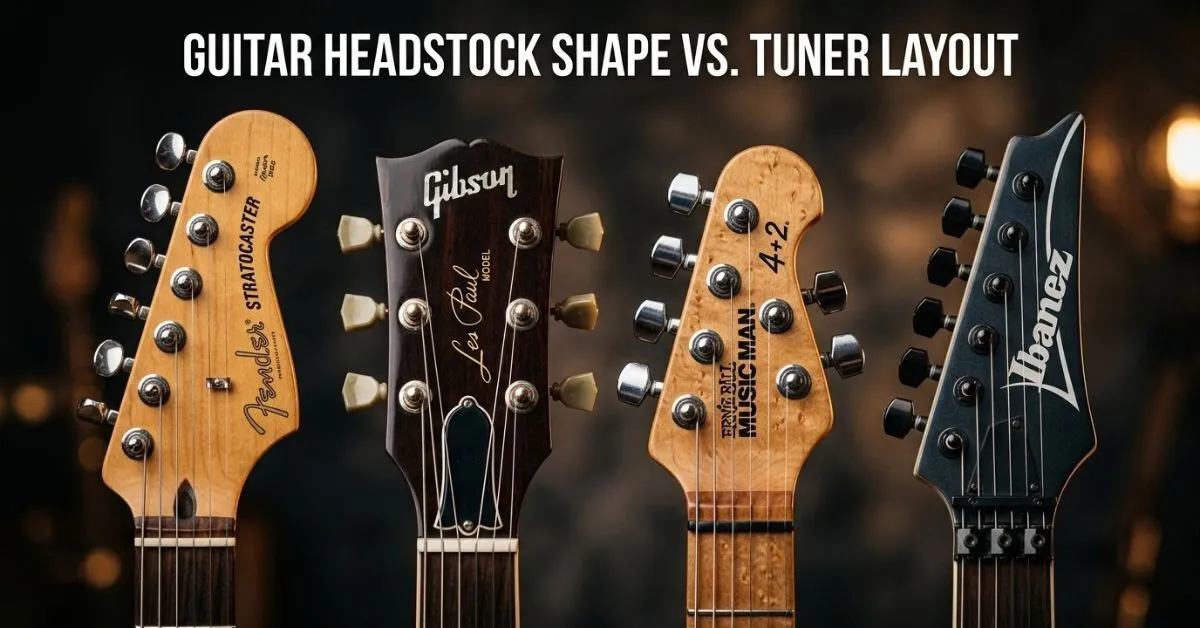
These two ideas are easy to mix up. A headstock shape describes the outside form, while a tuner layout describes where the tuning machines sit. Understanding the difference helps you describe a guitar more accurately.
- Outline First
Meaning: Start by describing the outside shape before discussing the position of the tuning machines. - Layout Second
Meaning: Add the tuner arrangement after the outline to make the description more precise. - Symmetry Check
Meaning: Compare both sides to see whether the headstock has a balanced or intentionally uneven design. - Point Check
Meaning: Look for one, two, or several visible tips along the upper edge. - Curve Check
Meaning: Notice whether the outline uses soft curves, tight bends, or mostly straight sections. - Width Check
Meaning: Compare the narrow neck connection with the widest part of the headstock. - Length Check
Meaning: A long headstock can look very different from a short one even when the basic shape is similar. - Slot Check
Meaning: Look for open channels that allow strings to pass through the headstock. - Hardware Check
Meaning: Examine the tuner size and position because hardware can change how the overall design appears. - Profile Check
Meaning: Consider the complete silhouette rather than focusing on one small corner or point.
🏆 Best Choice: Outline First is the simplest rule to remember. Once you know the outer shape, the tuner layout becomes a useful second layer of identification.
✏️ How To Choose A Guitar Headstock Shape
Choosing a headstock shape is more than picking something that looks cool. The design should match the guitar’s body, neck, hardware, playing style, and overall visual character. A good headstock feels like part of the guitar rather than a separate piece.
- Match the Body
Meaning: Choose an outline whose curves and angles feel natural beside the guitar’s body shape. - Match the Neck
Meaning: The transition from the neck into the headstock should look smooth and intentional. - Consider Scale
Meaning: A very large headstock can overwhelm a small instrument, while a tiny one may look lost on a large body. - Check Tuner Space
Meaning: Make sure the chosen outline leaves enough room for the required tuning hardware. - Think About Balance
Meaning: The headstock should visually support the guitar instead of making one end appear too heavy. - Plan the Logo Area
Meaning: A broad clear surface gives you more freedom for a logo, artwork, or decorative detail. - Choose Your Era
Meaning: Curves and proportions can make a guitar feel vintage, modern, classical, or futuristic. - Study the String Path
Meaning: The shape should work with the intended path from the nut toward each tuning machine. - Keep It Practical
Meaning: A beautiful outline still needs enough space and strength for real guitar hardware. - Sketch Before Building
Meaning: Testing the silhouette on paper or digitally can reveal proportion problems before construction begins.
🏆 Best Choice: Match the Body is the best starting point for a custom design because the headstock should feel connected to the guitar’s full visual language.
🔥 Guitar Headstock Shape Ideas For Custom Builds
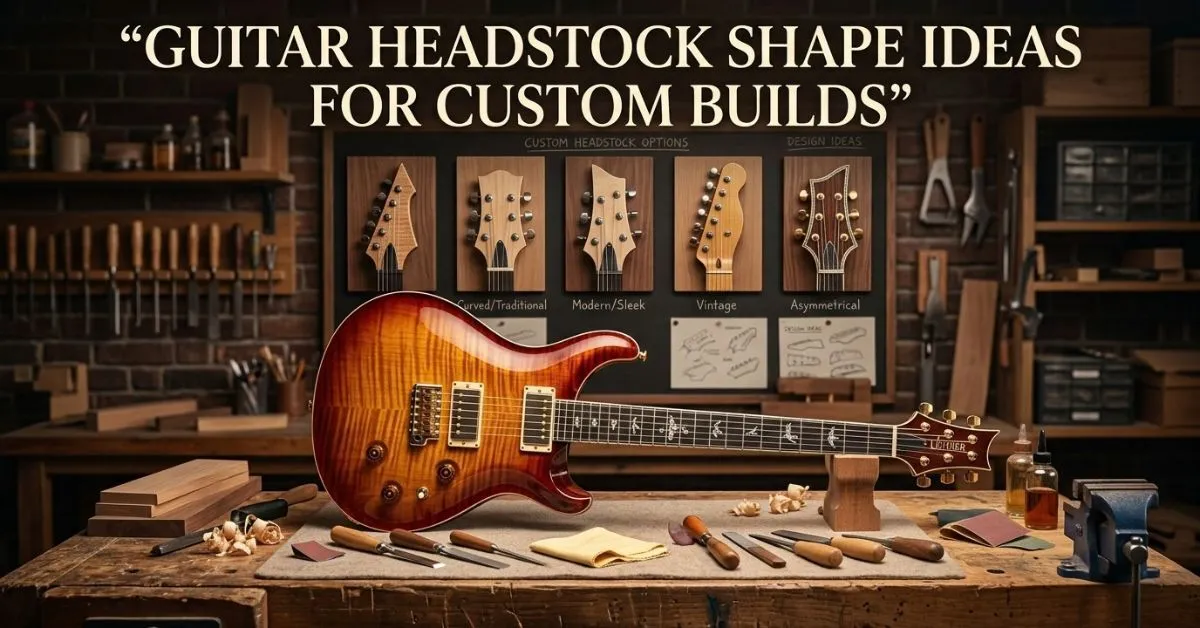
A custom headstock gives a builder room to create something personal. The best designs usually start with a clear idea rather than random decoration. Think about the guitar’s mood, then let the outline support that idea.
- Modern Classic
Meaning: Traditional proportions are combined with cleaner contemporary edges. - Retro Modern
Meaning: Older visual influences are simplified into a fresher modern silhouette. - Organic Curve
Meaning: Natural flowing edges create a softer shape inspired by forms found in nature. - Geometric Cut
Meaning: Deliberate straight sections and corners create a precise architectural appearance. - Asymmetric Flow
Meaning: One side differs from the other while the overall outline still feels visually balanced. - Slimline
Meaning: A narrow profile keeps the headstock lightweight in appearance and visually understated. - Wideface
Meaning: Extra surface width provides a strong visual platform for decorative or functional details. - Splitline
Meaning: A central visual division separates the headstock into two connected design areas. - Carved Edge
Meaning: Sculpted outer sections add depth and craftsmanship to the basic silhouette. - Custom Crest
Meaning: A distinctive upper section acts like a personal emblem for the instrument.
🏆 Best Choice: Custom Crest is ideal when the guitar is meant to feel personal or one-of-a-kind. The upper silhouette can become a signature detail that people remember.
📈 Headstock Shape Trends For 2026
Modern guitar design continues to mix familiar ideas with personal customization. Instead of treating headstocks as a fixed template, builders can combine outline, tuner layout, finish, wood choice, and small decorative details. That creates many possible variations without abandoning practical design.
- Clean Geometry
Meaning: Simple straight edges and measured angles create a fresh contemporary appearance. - Soft Minimalism
Meaning: Gentle curves and limited decoration produce a modern design that feels calm rather than flashy. - Mixed Era
Meaning: Vintage-inspired proportions are paired with modern hardware or cleaner detailing. - Natural Edge
Meaning: Organic curves create a handmade appearance that highlights the character of the wood. - Compact Profile
Meaning: A shorter outline reduces visual bulk while keeping the design distinctive. - Bold Symmetry
Meaning: Matching left and right sections create a highly controlled and balanced silhouette. - Controlled Asymmetry
Meaning: Small differences between the two sides add personality without making the shape look accidental. - Custom Inlay Focus
Meaning: A relatively simple outline provides a clean surface for decorative inlay work. - Wood-First Design
Meaning: The headstock shape stays restrained so the natural grain and material become the main visual feature. - Hybrid Classic
Meaning: Familiar traditional elements are blended with a new outline or modern proportion.
🏆 Best Choice: Hybrid Classic is a useful direction for a 2026 custom design because it can feel familiar and fresh at the same time without depending on extreme shapes.
🎯 Guitar Headstock Shape Names: A Simple Decision Guide
If you are still unsure what to call a headstock, do not overthink it. Start with the most obvious visual feature and then add one or two supporting details. A clear description is often more useful than trying to force the design into a perfect category.
Use this quick process:
1. Look at the outline.
Is it rounded, flat, pointed, angled, slotted, or flowing?
2. Count the tuner arrangement.
Look for 3+3, 6-in-line, staggered, or another layout.
3. Check for slots.
Open slots immediately separate many traditional designs from solid-face styles.
4. Notice the main visual feature.
A point, curve, peak, wing, or unusual corner may define the design.
5. Compare the proportions.
Ask whether the headstock is short, long, wide, narrow, compact, or extended.
6. Describe the style.
Words such as classic, vintage, modern, custom, artistic, or minimalist can add useful context.
In my years looking at naming patterns, the clearest descriptions are usually the simplest ones. You do not need a complicated technical label when “pointed 6-in-line headstock” explains the design perfectly.
🏆 Best Choice: Clear Description is the best naming strategy because it tells another person exactly what to look for instead of depending on an unofficial nickname.
FAQs:
What is the headstock of a guitar?
The headstock is the section at the end of the guitar neck where the tuning machines are mounted. It holds the strings after they pass over the nut and allows the player to adjust string tension.
What are the most common guitar headstock shapes?
Common descriptive styles include paddle, pointed, rounded, diamond, slotted, 3+3, and 6-in-line designs. The exact terminology can vary between builders and guitar makers.
What does 3+3 mean on a guitar?
A 3+3 arrangement means three tuning machines are positioned on one side of the headstock and three are positioned on the other side.
What does 6-in-line mean?
A 6-in-line headstock places all six tuning machines along one side. It is a very recognizable arrangement on many electric guitars.
What is a slotted guitar headstock?
A slotted headstock has openings cut into the headstock through which the strings pass toward the tuning machines. It is strongly associated with many traditional acoustic and classical guitar designs.
Does headstock shape affect guitar sound?
The headstock shape itself does not automatically determine the guitar’s sound. Construction, materials, neck design, string path, hardware, and many other factors can influence the instrument.
Why do guitar headstocks have different shapes?
Different shapes can come from tradition, construction methods, brand identity, ergonomics, aesthetics, tuner arrangement, and custom design preferences.
Can I design my own guitar headstock?
Yes, custom guitar builders can create original headstock outlines. However, the design still needs to work with the neck, nut, string path, tuning machines, and structural requirements.
Are guitar headstock names official?
Not always. Some terms are general descriptive language, while others may be associated with particular makers, models, or design traditions.
How can I describe an unknown guitar headstock?
Start with the outer outline, then describe the tuner layout. For example, you might say “rounded 3+3 headstock” or “pointed 6-in-line headstock.” This gives a clear visual description even if you do not know an official name.
Conclusion:
Guitar headstock shape names can seem confusing at first, but the basic idea is simple. Look at the outer outline, then look at the tuner layout, and finally check whether the design has slots, unusual curves, points, or decorative details.
This guide covered classic paddle and 3+3 designs, acoustic slotted styles, electric pointed shapes, modern profiles, artistic concepts, tuner arrangements, vintage-inspired outlines, and custom-build ideas.
You also learned why terms such as 6-in-line, staggered, reverse, and slotted describe different parts of the headstock design.
If you are choosing a shape for a custom guitar, start with the body and neck. Then think about balance, tuner space, string path, and the visual mood you want. You can even combine simple ideas to create something original.
The perfect headstock does not need the fanciest name. It needs to fit the guitar. A great guitar starts with a great shape and sometimes, the smallest piece at the end of the neck gives the whole instrument its personality.

I’m James Anderson, a names expert and author at Unlocknames.com, passionate about exploring name meanings, origins, history, and unique names ideas.